

Arctic coastal waters are undergoing some of the world’s most severe warming. Laboratory studies that simulate raised sea temperatures suggest that some species living on shallow polar seabeds are supremely sensitive to warming. Now we want to test their sensitivity in real-world conditions.
By: Terri Souster // UiT The Arctic University of Norway
Bernabé Moreno // Institute of Oceanology, Polish Academy of Sciences
Katherine M Dunlop // Institute of Marine Research
David KA Barnes // British Antarctic Survey, Cambridge, United Kingdom
It is possible to investigate how warming impacts assemblages of species in their natural habitat, without changing other variables. Man-made panels that emulate a hard surface for benthic organisms to settle on have been used for nearly a century to investigate colonisation, recruitment, and assemblage succession in coastal and subtidal habitats. If connected to nearby power supplies, these panels can be heated to provide a small area of colonisable surface at a set temperature above ambient. This method has been used successfully in western Australia, West Antarctica and the UK to examine how macrobenthic species respond to sustained temperatures +1 and +2°C above ambient. Unheated panels serve as controls, to show the species’ responses to the ambient temperature.
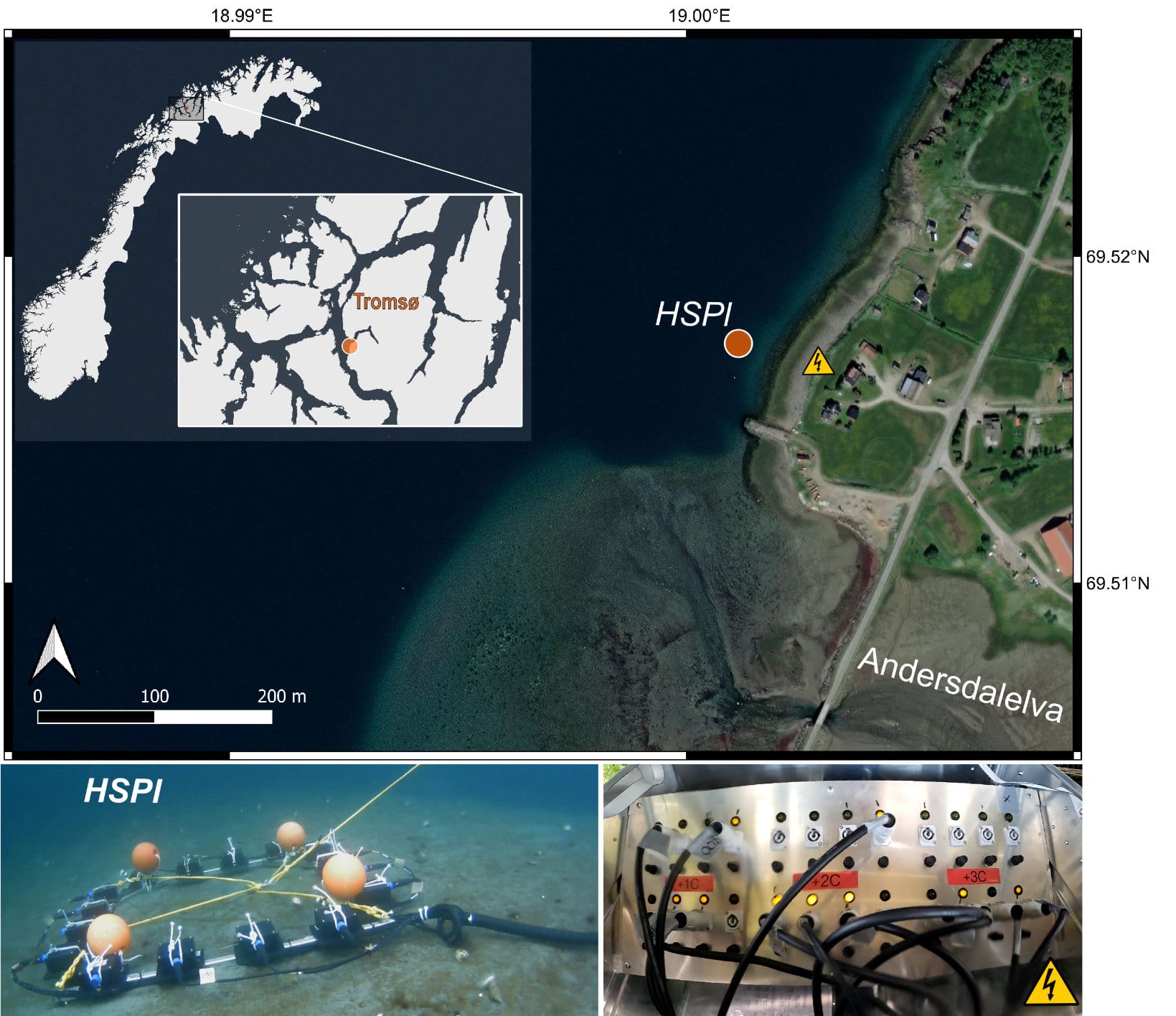
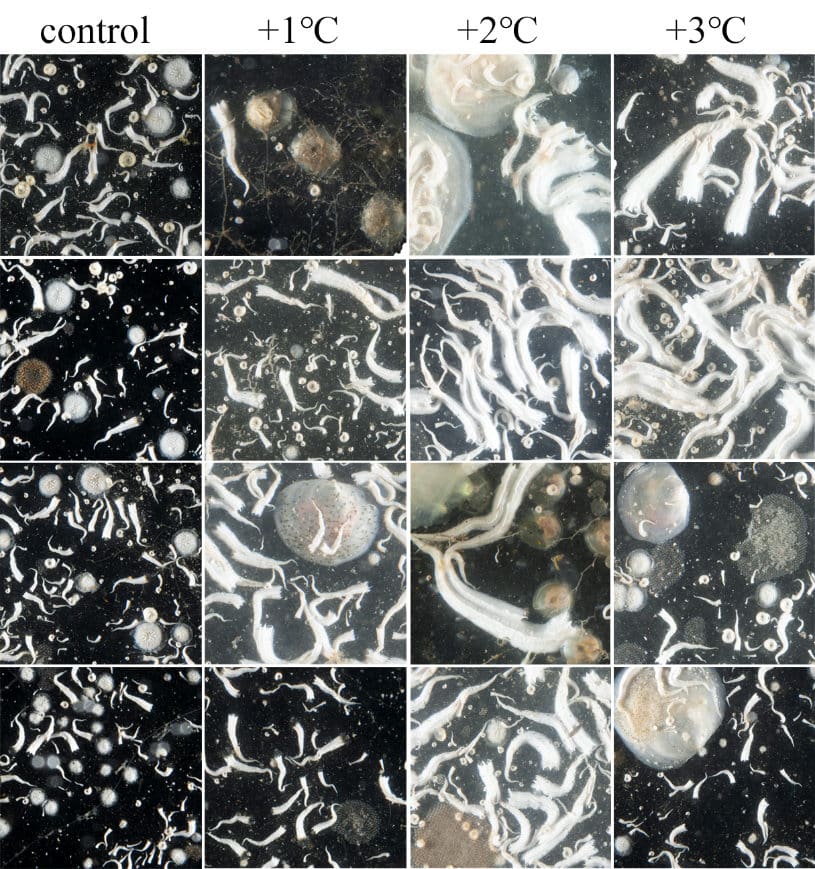
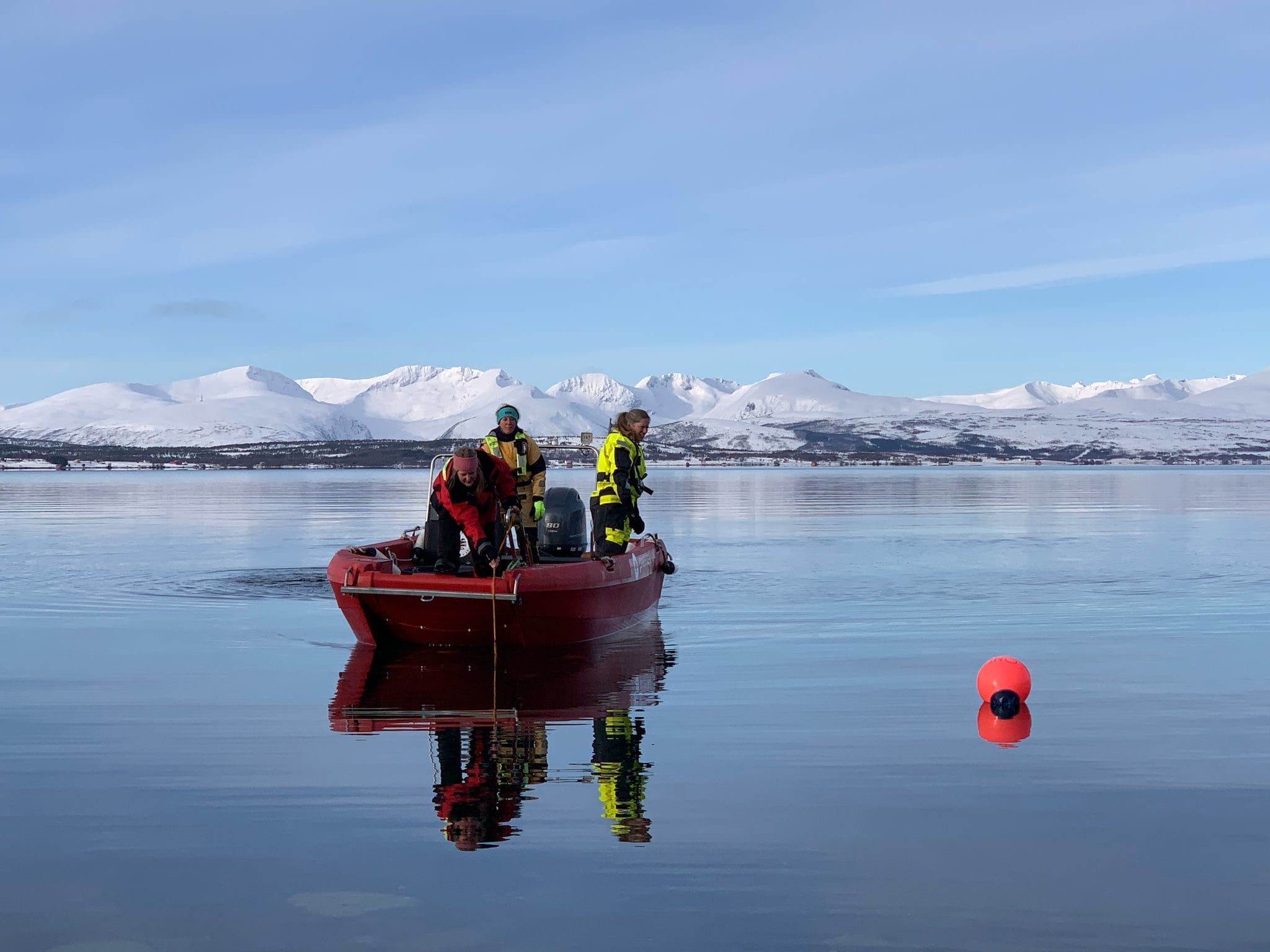
Although much is already known about early colonisation, competition, and growth on natural substrates and unheated subtidal settlement panels in the Arctic, heated settlement panels (HSPls) have never previously been used there. Thus, our study offered the first opportunity to test warming effects in situ in the Arctic. Manipulative experimental fieldwork at high latitudes is essential for understanding the mechanisms underlying ecological change processes. Improved knowledge will aid in predicting responses both to differing levels of warming—a key stressor—and ecological tipping points in cold-water ecosystems under projected IPCC climate scenarios.
Polar organisms’ responses to heat
The whalers’ burial site at Likneset in Smeerenburgfjorden exemplifies Cloches have been widely used in polar land habitats to investigate how mosses, lichens and hardy flowering plants, as well as insects and other small animals, might respond to varying degrees of warming. This task is more challenging in the sea below the shoreline, not least because it requires scuba diving. However, a study involving an identical HSPl near the UK Rothera research station along the Antarctic Peninsula proved that this apparatus functions well in polar conditions. That study, led by Dr Gail Ashton showed many key points about how shallow-water species respond to southern polar warming.
Across a nine-month deployment, temperatures 1°C above ambient increased the growth of some pioneer species. In contrast, 2°C warming increased the variability in growth of many species. When spatial interference competition between those recruits was examined at those same temperatures, +1°C increased the probability, density, and complexity of contests for space between competitors. At +2°C warming it was, again, mainly the variability of competition that changed, rather than the intensity, just as for growth. However, ambient sea temperatures along Antarctic coasts are typically cooler and much more constant than in the Arctic and the evolutionary history of biodiversity is very different. We hope that running heated panels in an Arctic fjord will give powerful insight into how colonisation of newly available space will occur in a rapidly warming world.
Managing marine ecosystems
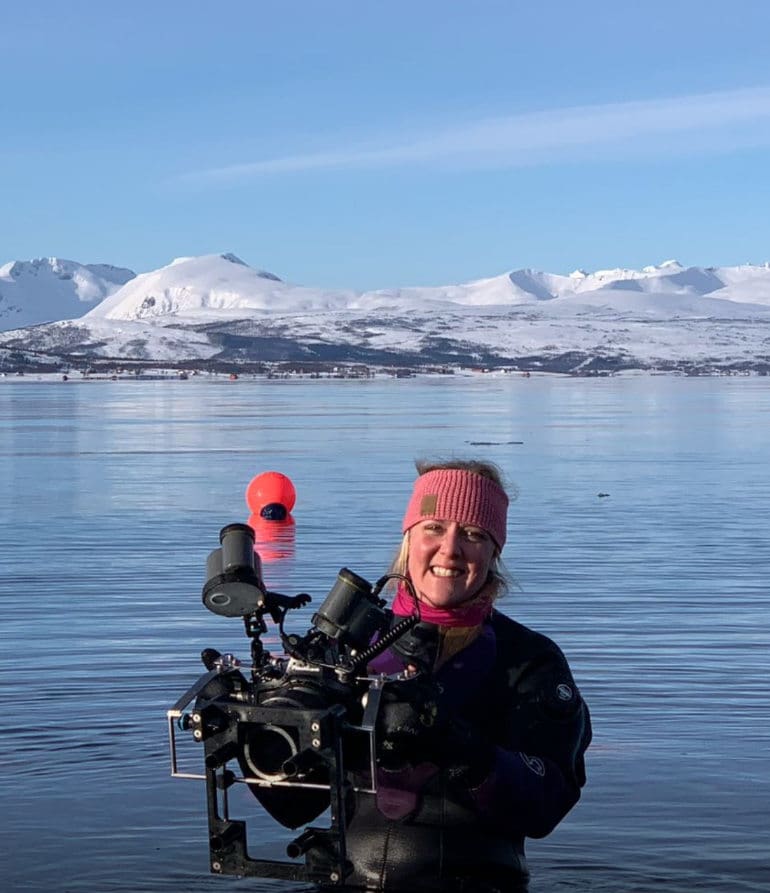
Establishing the heated panels generated a new set of challenges, not least in how to photograph at high resolution despite a strong halocline. Preliminary results show that small increases in water temperatures impact which benthic organisms settle and grow; this could potentially alter the species composition of benthic assemblages that establish and thrive in Arctic coastal waters.
Colonisation was dominated by encrusting tube-forming polychaete worms, but many other taxa such as bivalve molluscs, bryozoans and others were present. The variability in colonists—both within and across treatments—was considerable. Identifying them will require detailed, painstaking collaborative effort. Once the species are identified, we can measure densities, sizes and interactions and begin to tease out the key effects.
Many important questions remain about the impact of warming waters on benthic communities. Will warming favour the settlement and growth of invasive species such as colonial tunicates and would that promote biofouling on fish farms and pipelines? The heated settlement panels can help us find answers relevant to management of High North coastal ecosystems.
Sustainable management and climate adaptation in coastal areas requires an improved understanding of the cumulative risk that multiple anthropogenic stressors pose to ecosystem health and services. For marine spatial planning, and to follow the EU water framework directive, it is crucial to assess the impact of human activities on benthic communities within the context of climate change. Manipulative field studies allow to us investigate and quantify climate change effects in situ, providing the knowledge base for upscaling prediction to larger areas of relevance to management. Collection of data that increase understanding of how climate change may affect the ecology of Arctic ecosystems is also of great public interest, and the HSPl project enjoyed strong support from local residents.
Recent cross-institutional efforts, formalised through the Fram Centre-funded HSPl project helped ensure the success of the first Arctic trial of heated settlement panels. Future work is expected to couple heated panel experiments with in situ sensors, machine-learning image annotation, and genetic sampling of early colonisers to capture both ecological and physiological processes.
Acknowledgements
We are grateful to Mark Preston (British Antarctic Survey) for building, testing and manufacturing heated panels; to the community at Indre Andersdal for supporting the project and providing electricity; to UiT for access to small boats for field work; and to the entire team for their contributions to the project’s success.
Further reading
Ashton GV, Morley SA, Barnes DKA, Clark MS, Peck LS (2017) Warming by 1°C Drives Species and Assemblage Level Responses in Antarctica’s Marine Shallows. Current Biology 27: 2698–2705.
Barnes DKA, Ashton GV, Morley SA, Peck LS (2021) 1 °C Warming Increases Spatial Competition Frequency and Complexity in Antarctic Marine Macrofauna. Communications Biology 4: 208.
Moreno B, Peck LS, Clark MS, Dunlop KM, Barnes DKA, Bluhm B, Molis M, Ziegler A,
Longsden J, Hatt A, Jordà Molina È, Souster T (2025) Heated settlement plates (HSPl) in global experimentation: Experiences, research questions, future applications and collaborations. Research Ideas and Outcomes 11: e174994.