

For a few short weeks each year, the Arctic appears to burst into life. Early explorers often marvelled at the contrast between the silent, dark winter months and the sudden, shimmering activity under the summer midnight sun. This dramatic flip traces back to the poles’ extreme annual light cycle—and it shapes not only the ecosystem but also the rhythms of Arctic research itself.
By: Allison Bailey, Philipp Assmy, Anette Wold, Fanny Cusset, Igor Eulaers, Agneta Fransson, Lucie Goraguer, Marianna Pinzone and Mats Granskog // Norwegian Polar Institute
Daniel Vogedes, Roberta Cardenas and Ricarda Runte // UiT The Arctic University of Norway
Malin Daase1 // University Centre in Svalbard
Clara JM Hoppe, Sneha Sivaram and Max Willems // Alfred Wegener Institute, Germany
Catarina Magalhaes and Eva Lopes // Interdisciplinary Centre of Marine and Environmental Research, Portugal
Slawomir Kwasniewski, Józef Wiktor, Agnieszka Tatarek, Marta Gluchowska and Monika Zablocka // Institute of Oceanology Polish Academy of Sciences
Melissa Chierici // Institute of Marine Research
Milan Beck // University of Bremen, Germany
Lola Nader // University of Kiel, Germany
Anand Jain and Divya David T // National Centre for Polar and Ocean Research, India
Roberta Guerra // University of Bologna, Italy
Carmen Rizzo // Stazione Zoologica Anton Dohrn, Italy
JP Balmonte // Lehigh University, USA
Manuel Bensi // National Institute of Oceanography and Applied Geophysics, Italy
Francesco Paladini de Mendoza // Institute of Polar Science, Italian National Research Council
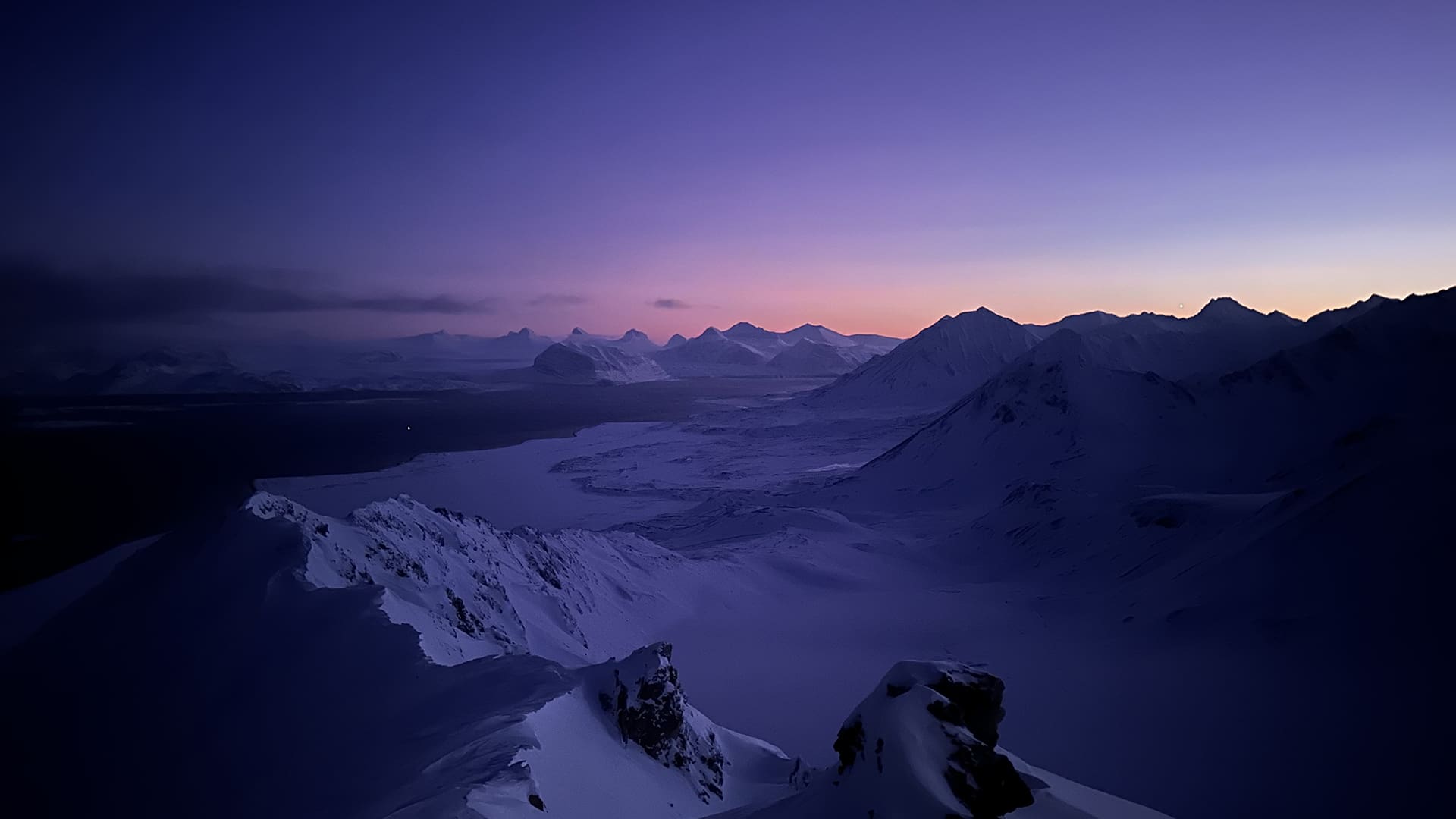
Because summer brings 24-hour sunlight, the mildest weather, the most open water, and the least sea ice, it is also the season we know best. Much of what scientists understand about the Arctic seas comes from this narrow window, when ships can travel farthest and safest. For decades, researchers assumed that the Arctic ecosystem mirrored this pattern: lively and productive in summer, dormant and quiet in winter.
But a few rare—and logistically demanding—winter campaigns have upended that view. They show that many organisms remain active throughout the polar night, that key life-history events unfold outside the summer season, and that unexpected biological activity can occur even in the dark. If we focus our research only on summer, we risk overlooking these crucial dynamics, including climate-sensitive stages and processes that take place in fall, winter, and spring. To understand how the Arctic is responding to rapid warming, we need a year-round baseline—otherwise, small shifts in timing of key ecological events (a documented impact of climate change) could be misread, or worse, overlooked.
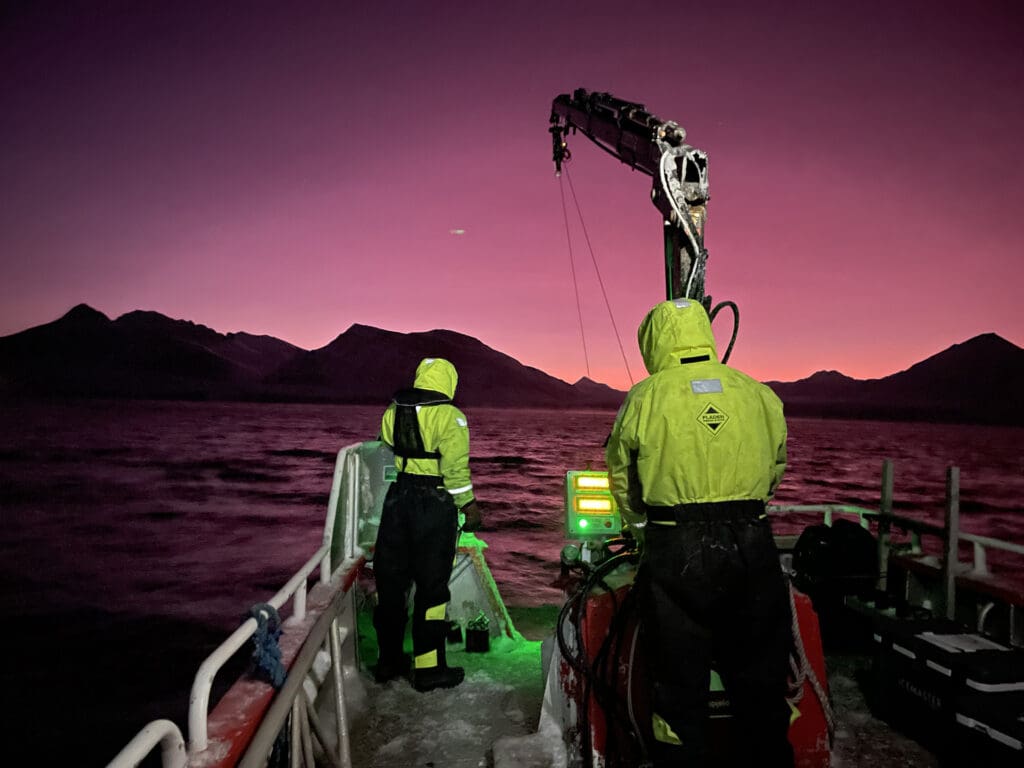
Photo: Allison Bailey / Norwegian Polar Institute
Yet, monitoring Arctic marine ecosystems across all seasons is notoriously difficult. Reliable access is limited: in Svalbard, for example, no large research vessels are stationed year-round, and only a single small research vessel operates throughout the year. Autonomous oceanographic moorings—underwater observatories anchored to the seafloor—help bridge the gap by collecting data in all seasons without human presence. But they are limited to a few locations and can measure only what their sensors are built for, such as temperature, salinity, currents, or acoustic signals of fish biomass. And many disregard the upper 20 metres of the water column to avoid interference with ships and ice, although that is exactly where some of the most dynamic biological processes occur.
To bring researchers themselves into the winter environment, several ambitious expeditions have frozen large research vessels into the drifting pack ice, turning them into mobile bases for months at a time. These drifting stations provide shelter, laboratories, and access to the surrounding ocean—but because they move with the ice, they pass over contrasting water masses and a shifting mosaic of habitats rather than staying anchored to one pelagic ecosystem through the year.
The ideal scenario, then, is simple but challenging: study a single Arctic marine habitat continuously year-round.
In Svalbard’s Ny-Ålesund Research Station, situated on the banks of Kongsfjorden, this becomes possible. With a research boat available year-round, on-site housing and laboratory facilities, biweekly flights even in winter, and an active international scientific community, the station is uniquely positioned to host coordinated seasonal studies of a high Arctic marine ecosystem. Recognising this potential, researchers within the Ny-Ålesund Kongsfjorden System Flagship—a collaborative marine research network—developed a year-round campaign now known as the International Kongsfjorden Year (IKY).
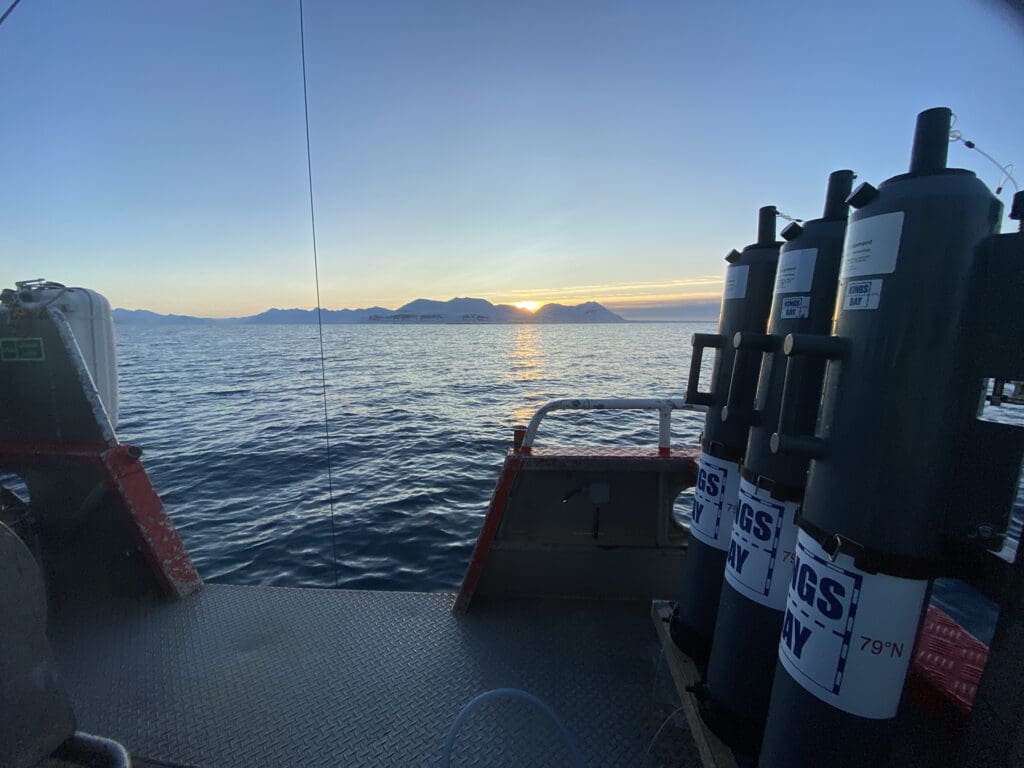
Photo: Anette Wold / Norwegian Polar Institute
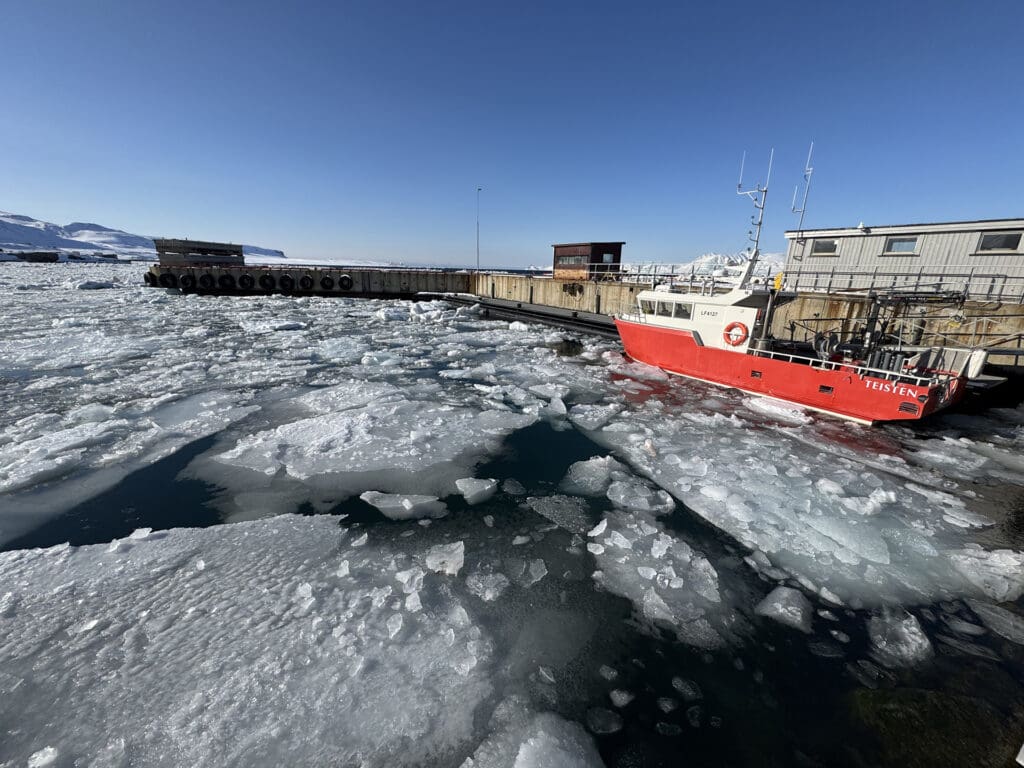
Photo: Allison Bailey / Norwegian Polar Institute
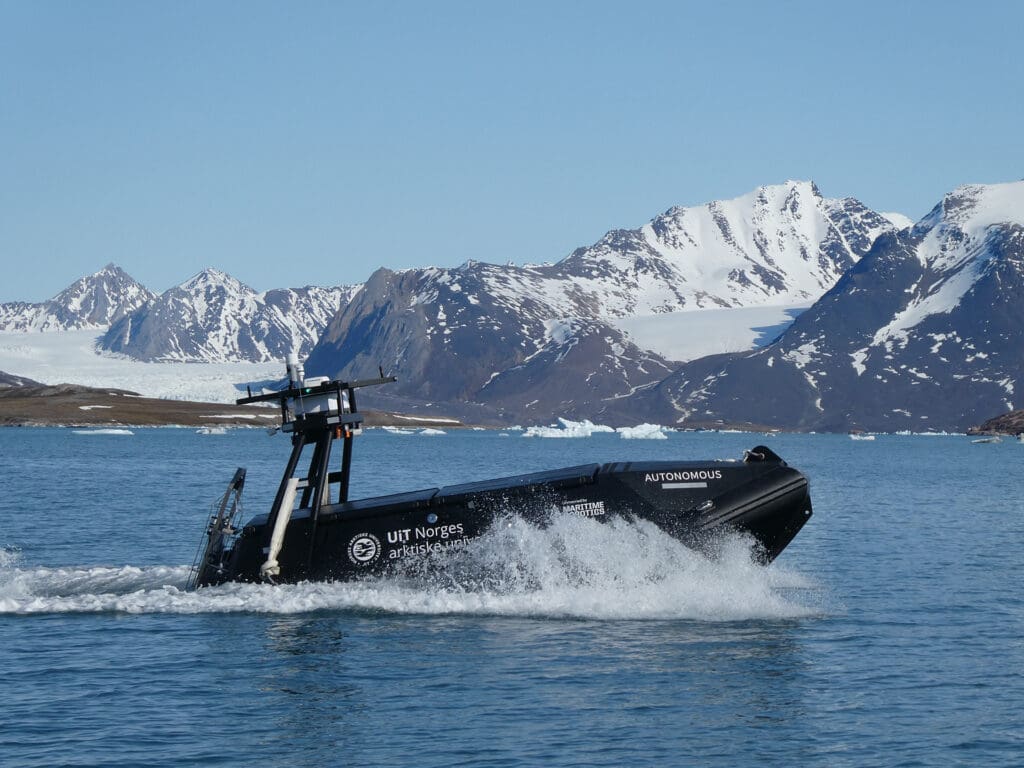
Photo: Malin Daase / UiT The Arctic University of Norway and University Centre in Svalbard
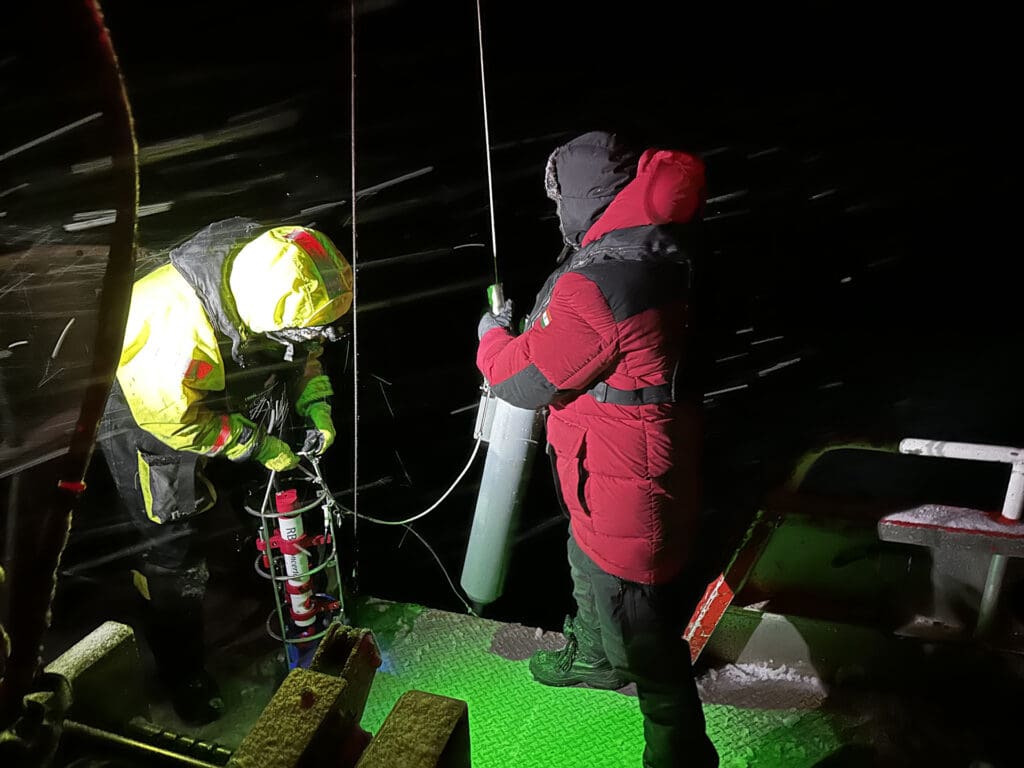
Over several years of discussions at annual Flagship meetings, the outlines of the campaign took shape. Multiple proposals were submitted to national and international funding sources, and teams from a growing list of countries committed to participating.
The largest project under the IKY umbrella was the German YESSS project, led by Clara Hoppe. YESSS stationed two rotating research teams in Ny-Ålesund for an entire year, gathering weekly measurements at both a deep mid-fjord pelagic site and an intertidal site, together with collaborators from India and the United States. Alongside high-frequency, year-round monitoring of plankton, protists, microbes and biogeochemical parameters, the project examined how seasonal conditions influence the sensitivity of four key organismal groups—polar cod, sea urchins, kelp, and phytoplankton—to ocean warming.
To complement these detailed observations at the central fjord site, additional teams collected data on similar parameters along the full length of the fjord. These efforts explored how signals observed at the central site vary spatially and how processes such as glacial meltwater inputs and inflowing Atlantic currents shape the ecosystem throughout the year. These included Norway’s OpKROP project, led by Malin Daase, which conducted four seasonal surveys along spatial transects, including optical properties and hydroacoustics to complement their long-term Kongsfjorden Marine Observatory programme; the Norwegian Polar Institute’s eight seasonal transects; and India’s bi-monthly CTD surveys.
Nine Arctic Field Grant recipients added further layers of insight, contributing new parameters, sampling capacity, and international collaboration. Cooperation among project groups was extensive: teams collected samples for one another, shared equipment, hosted collaborators on their vessels, and exchanged near-real-time information on conditions in the fjord.
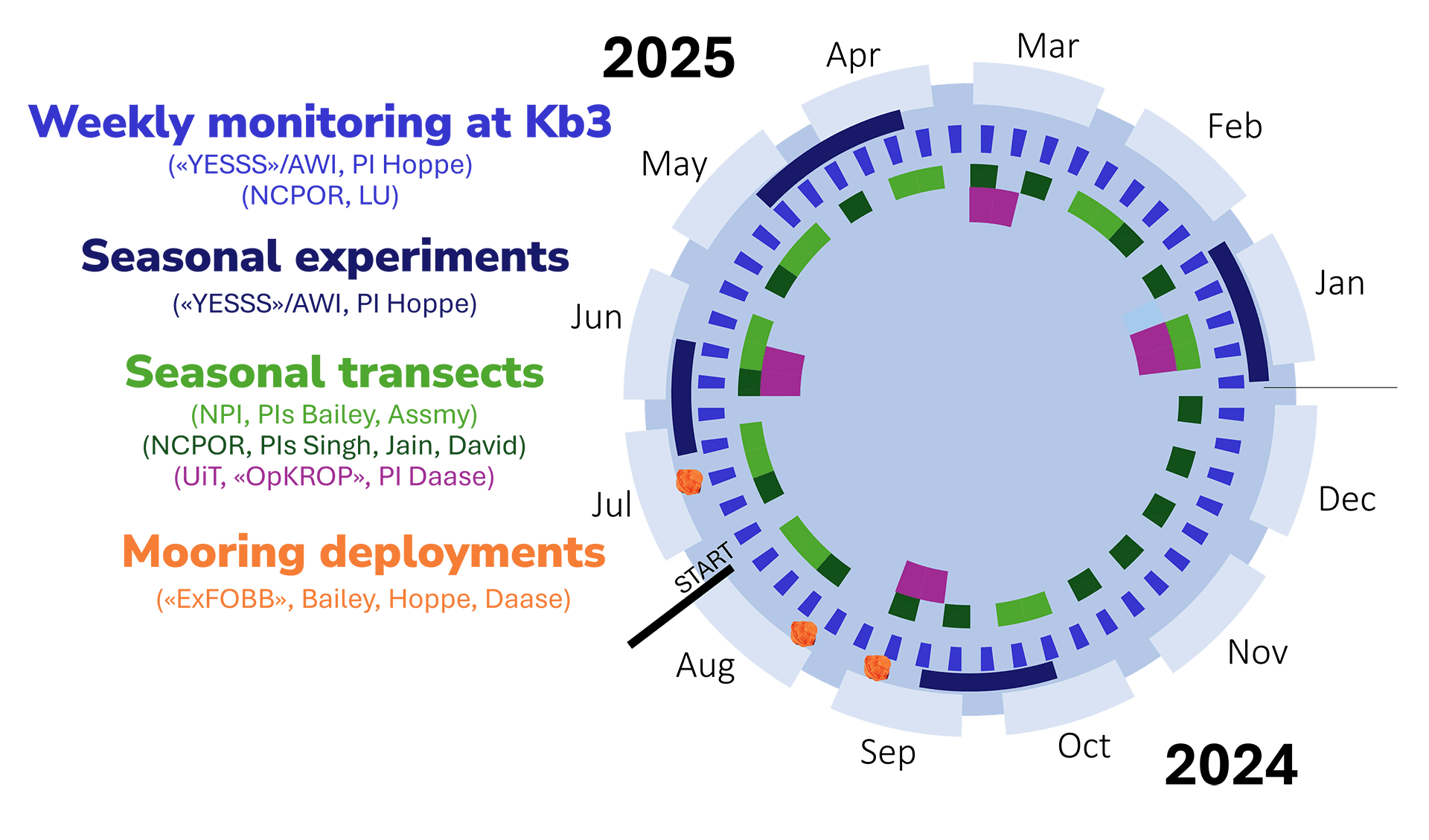
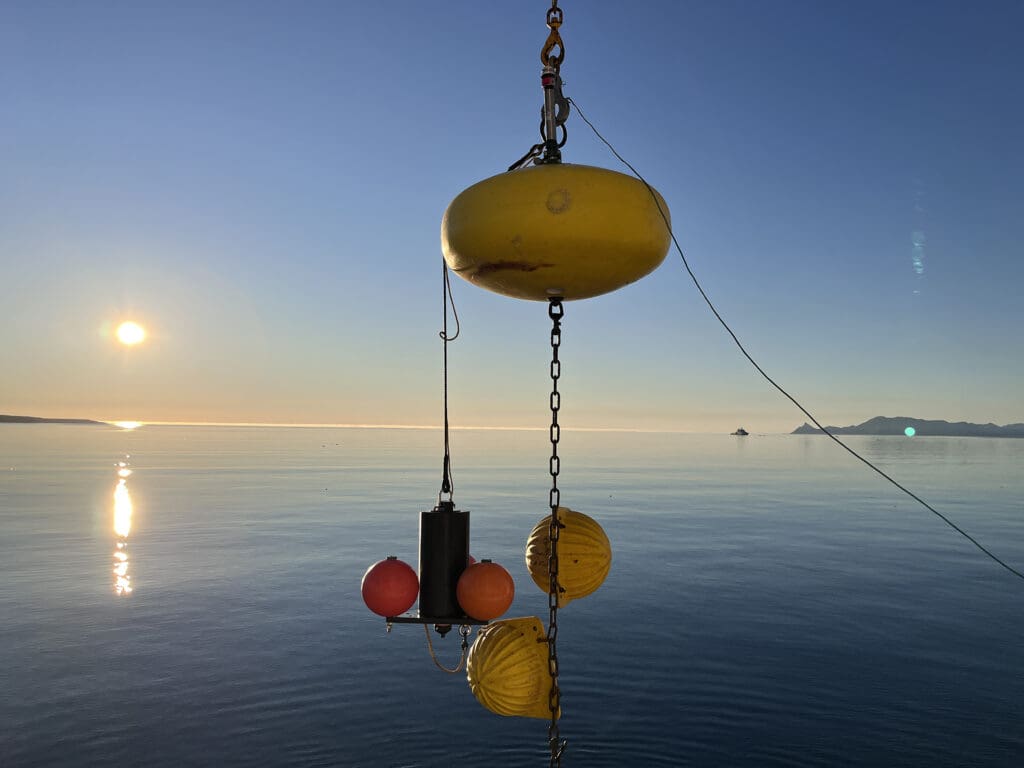
Meanwhile, the project ExFOBB (Extending Fjord Observatories for Biogeochemistry and Biology) funded by the Svalbard Integrated Arctic Observing System (SIOS) deployed three additional moorings in Kongsfjorden during the IKY period: a profiling mooring to capture surface-layer dynamics that traditional moorings often miss, and two inflow moorings placed to detect Atlantic Water before it enters the fjord.
Together, these efforts created a year unlike any other. In 2024–2025, the marine ecosystem of Kongsfjorden was observed with unprecedented temporal resolution, capturing the full seasonal rhythm of one of the Arctic’s most intensively studied fjords. The next phase is underway: analysing these immense datasets and synthesising them into ecosystem-level understanding. This work will lead to broad Flagship-led syntheses and a suite of more focused, project-level publications that will help define key periods for future monitoring and deepen our understanding of how Arctic ecosystems function—and change—across the entire year.