

Global demand for food is increasing. To meet this need, aquaculture has also expanded and is forecast to produce 60% of all fish for human consumption by 2030. This means the aquaculture industry must find sustainable sources of fish feed. One possibility is the marine copepod Calanus finmarchicus.
By: Lionel Camus, Kanchana Bandara and Pierre Priou // Akvaplan-niva
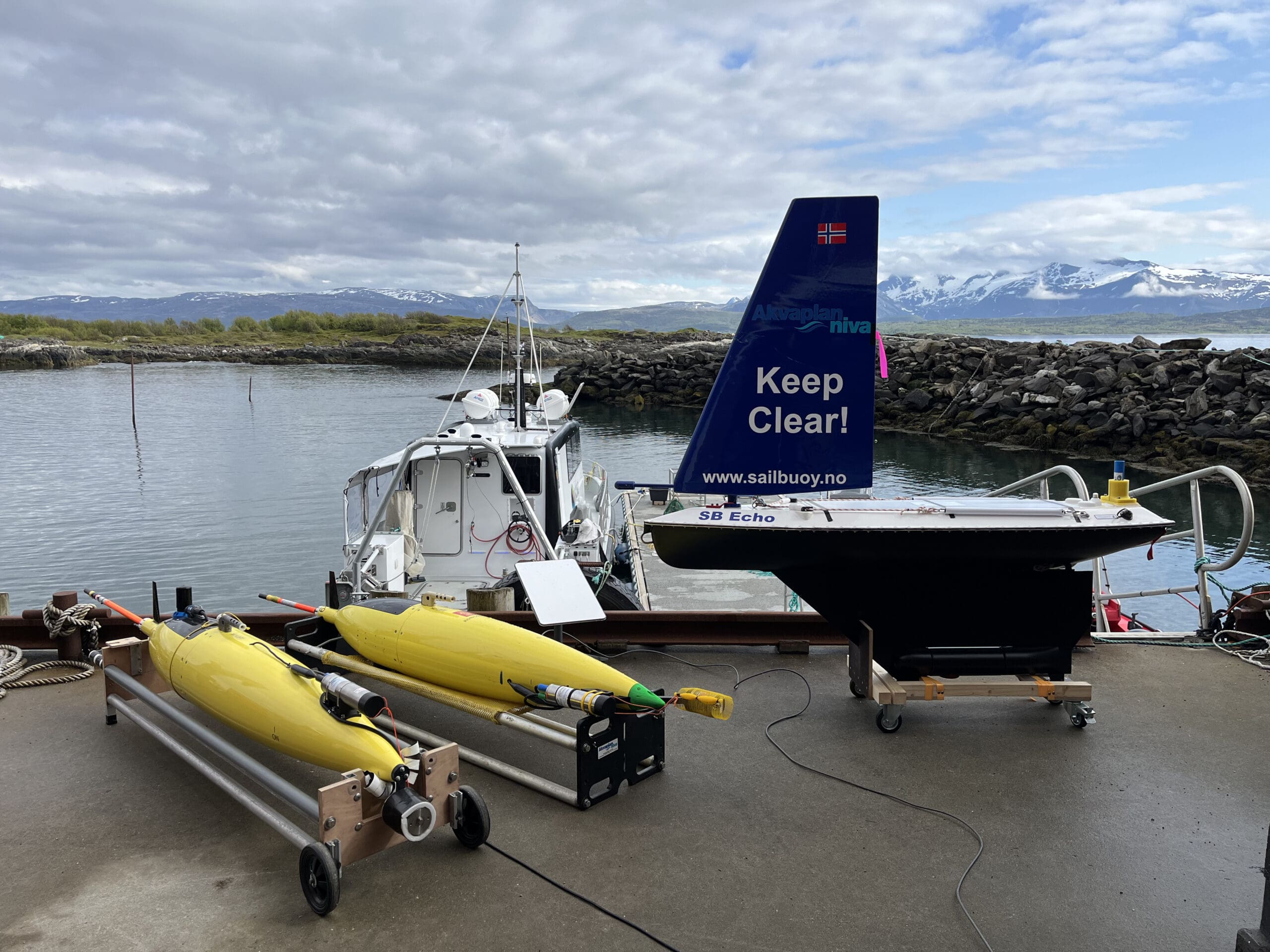
Photo: Pierre Priou / Akvaplan-niva
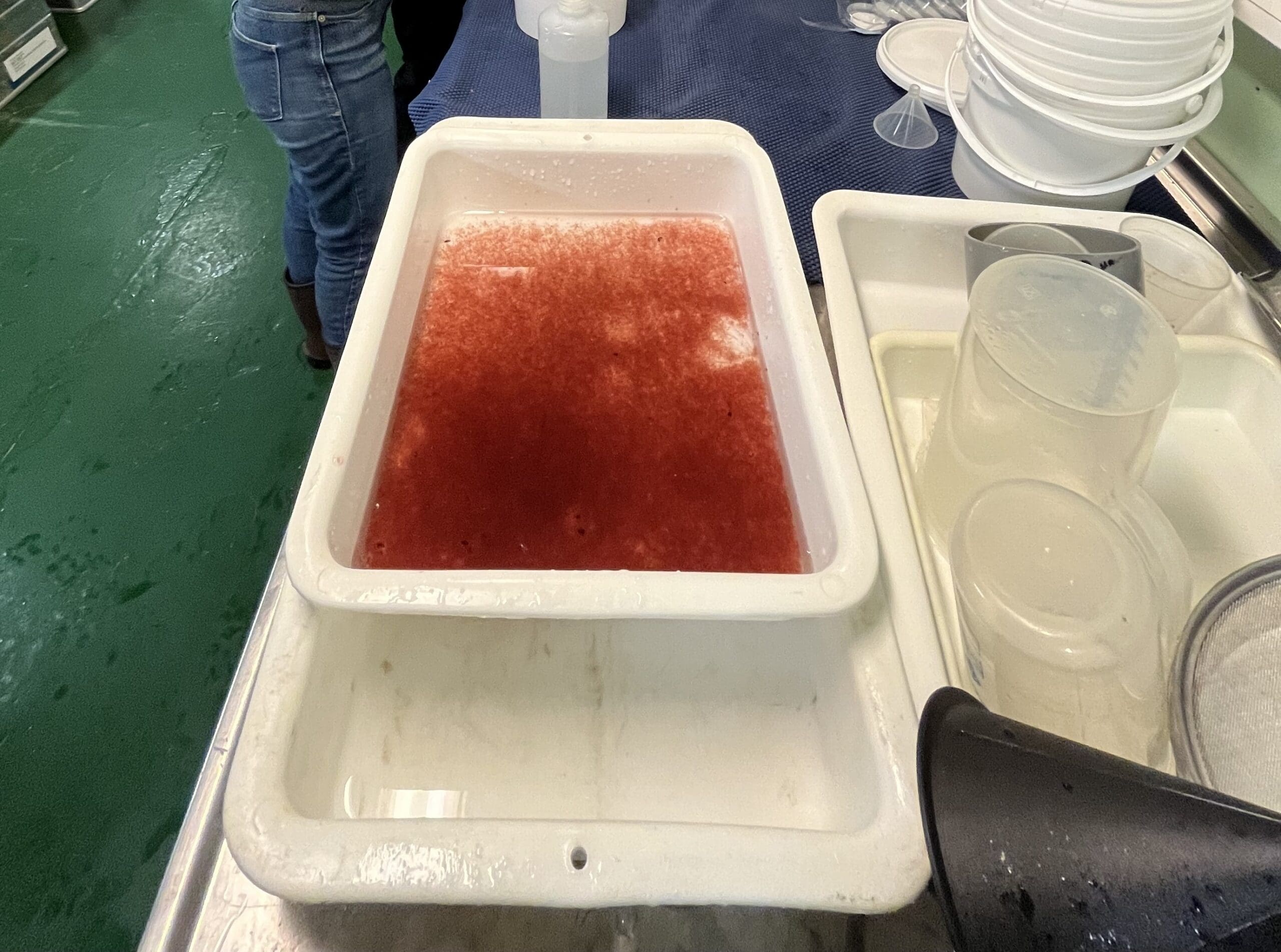
Today much of the feed used in fish farming is sourced from captured wild fish, making the sustainability of aquaculture questionable. Therefore, the aquaculture industry is on the lookout for sustainable feed sources. A marine copepod, Calanus finmarchicus, a crustacean about 1-2 mm long and abundant in the Norwegian Sea, offers an easily accessible lower trophic level resource. The copepod is rich in lipid, making C. finmarchicus a high-energy food source for many planktivorous fish and also an attractive feed ingredient in fish farming. Currently, the Norwegian company Calanus AS is processing and distributing C. finmarchicus harvested in the coastal waters of northeast Norway. The present-day harvest is estimated at about 0.5% of the annual quota set by the Norwegian Institute of Marine Research and accounts only for 0.00004% of the estimated C. finmarchicus stock in the Norwegian Sea.
The CliN-BluFeed project
Full title: A low-CO2 smart autonomous multiplatform system to monitor and forecast Calanus finmarchicus stock—a new sustainable climate-neutral blue fish feed
Partners:
- Akvaplan-niva (Norway)
- Institute of Oceanology Polish Academy of Sciences (Poland)
- Atlantic International Research Centre (Portugal)
- Cyprus Subsea Consulting and Services (Cyprus)
- Alfred Wegener Institute (Germany)
With the expansion of the aquaculture industry, the potential for the Calanus fishery to grow is large. This calls for managing the stock of this highly valuable marine resource to ensure a sustainable fishery.
To that end, the European Union’s Sustainable Blue Economy Partnership funded the project CliN-BluFeed.
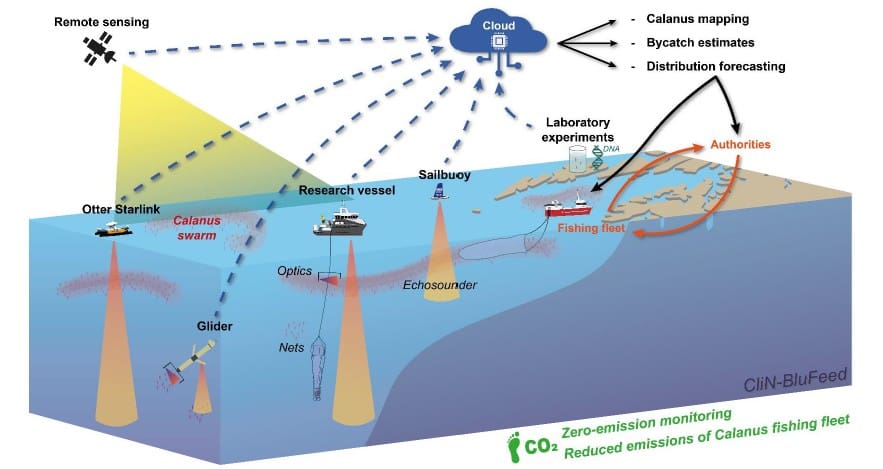
The main objective is to develop methodologies that advance the Norwegian Sea Calanus fishery as a sustainable climate-neutral blue resource for the aquaculture industry. This will be done through harnessing the potential of cutting-edge, low-carbon-emission autonomous marine monitoring technologies coupled with remote sensing, artificial intelligence, simulation modelling, and experimental investigations (see Fact box).
Two successful field surveys were conducted in 2024 in collaboration with the project “Migratory Crossroads” financed by the Research Council of Norway. In these surveys, autonomous uncrewed vehicles (AUVs) equipped with advanced sensors were deployed from a research vessel. The work continued in 2025 when the team demonstrated that the AUV could be deployed and recovered from the shore without the support of a research vessel. The AUVs were one Sailbuoy rigged with an echo sounder and two Seagliders rigged with the optical imagery sensor UVP6 and a echo sounder.
The echo sounder detects and quantifies plankton biomass, and the UVP6 is used to visualise, identify and quantify plankton species. Parallel with the AUVs collecting data during a month at sea, the team collected satellite images from the European Space Agency’s Copernicus to collect information on the ocean colour and from a NASA satellite with a LIDAR sensor that can penetrate the upper 20-30 m of the ocean. In addition to this laboratory experiments were performed to study the copepod behaviour. All collected data were then used to develop and support a population model that can predict copepod presence and density across time and ocean space.
The knowledge and cutting-edge methodologies and technological solutions provided by the CliN-BluFeed project will secure evidence which will support and improve the understanding and management of our marine ecosystem, with value creation effects for both industry and society.