

The Geological Survey of Norway is doing field work in the north of Norway to map old gneisses and granites. Among these major rock types, we find another type, schist, which can be rich in graphite, a mineral that is critical for our modern lifestyle.
By: Ane K Engvik, Håvard Gautneb and Janja K Solberg // Geological Survey of Norway
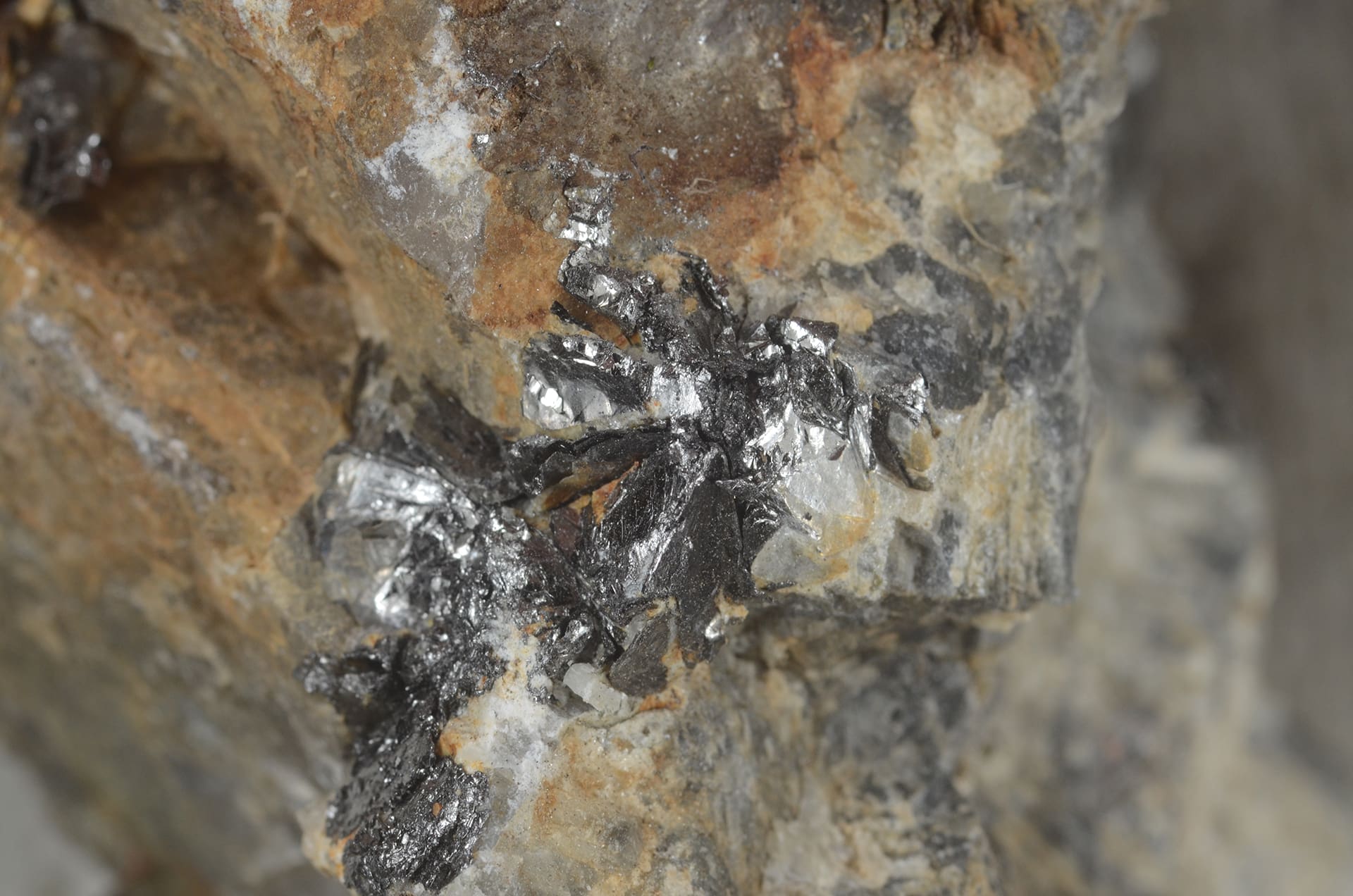
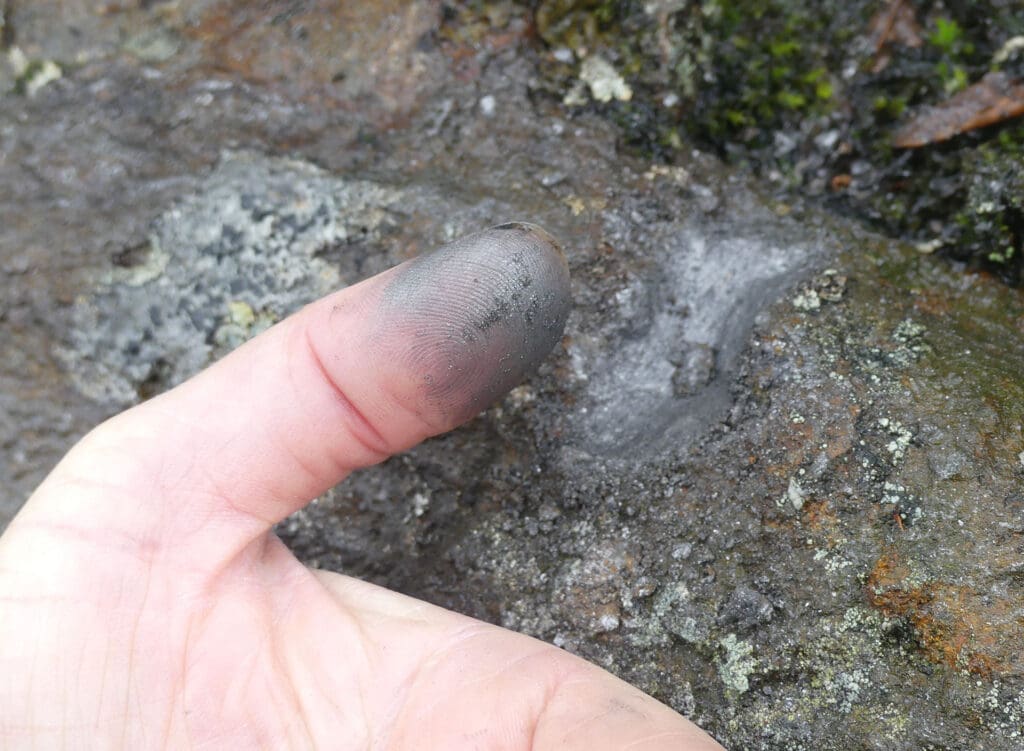
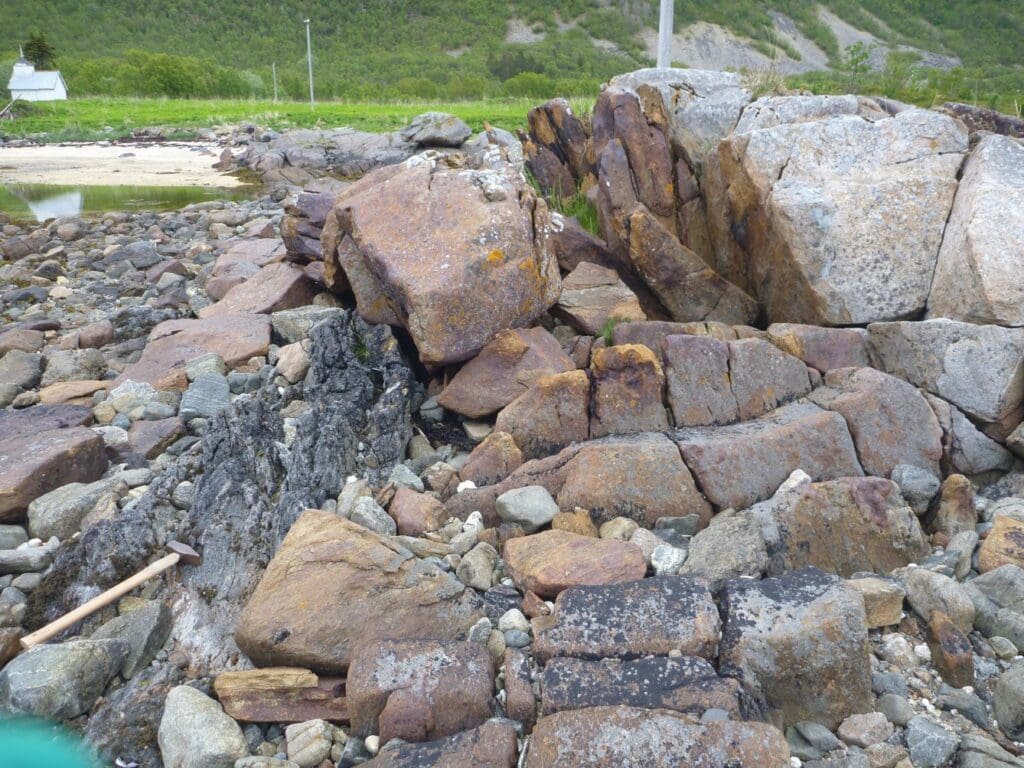
Sometimes called the black silver of northern Norway, graphite is usually difficult to recognise, as it tends to lie hidden in vegetated areas or as crumbled rock on beaches along the seashore. But geologists’ perceptive eyes know what to look for. Where the schist is rich in graphite it takes on a silver-black shiny look. We rub a shiny black rock face with a thumb, and if the thumb comes away grey, we know that the schist is rich in graphite.
Graphite consists exclusively of the element carbon (C) and is among the softest minerals known to science. Its physical properties are controlled by its crystal structure. The lattice of carbon atoms in graphite is structured as thin layers that slide easily along each other. This is precisely what happens when we write with a pencil: the “lead” of a pencil is actually graphite, which sheds layers when scraped against paper. The same thing happens when we use our thumb to test for graphite on the rock face.
A critical raw material
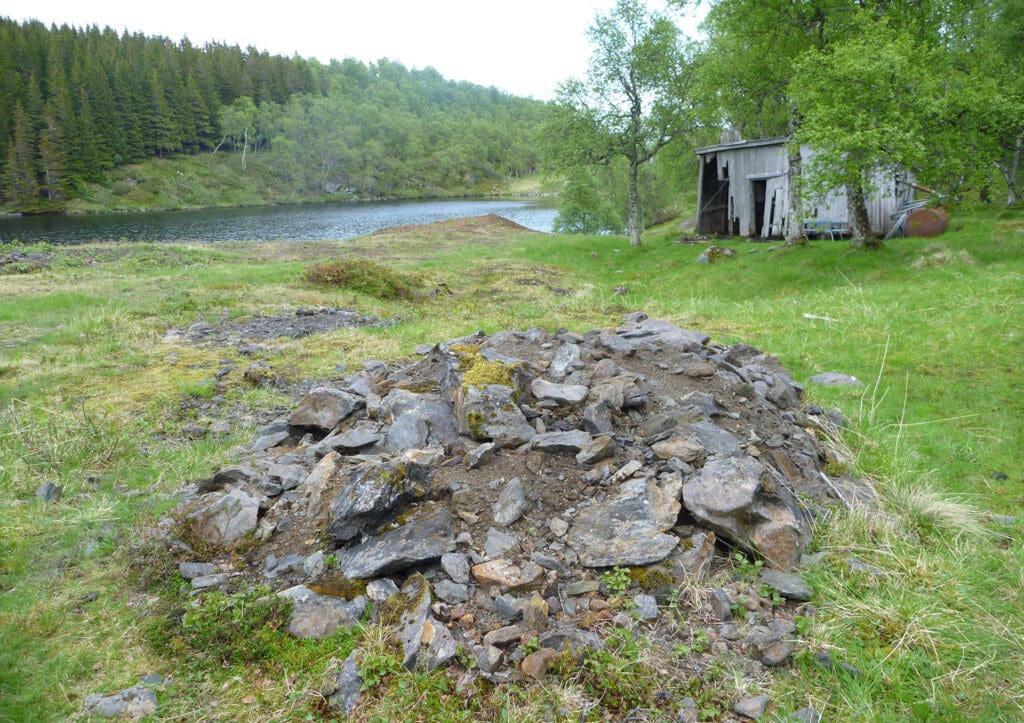
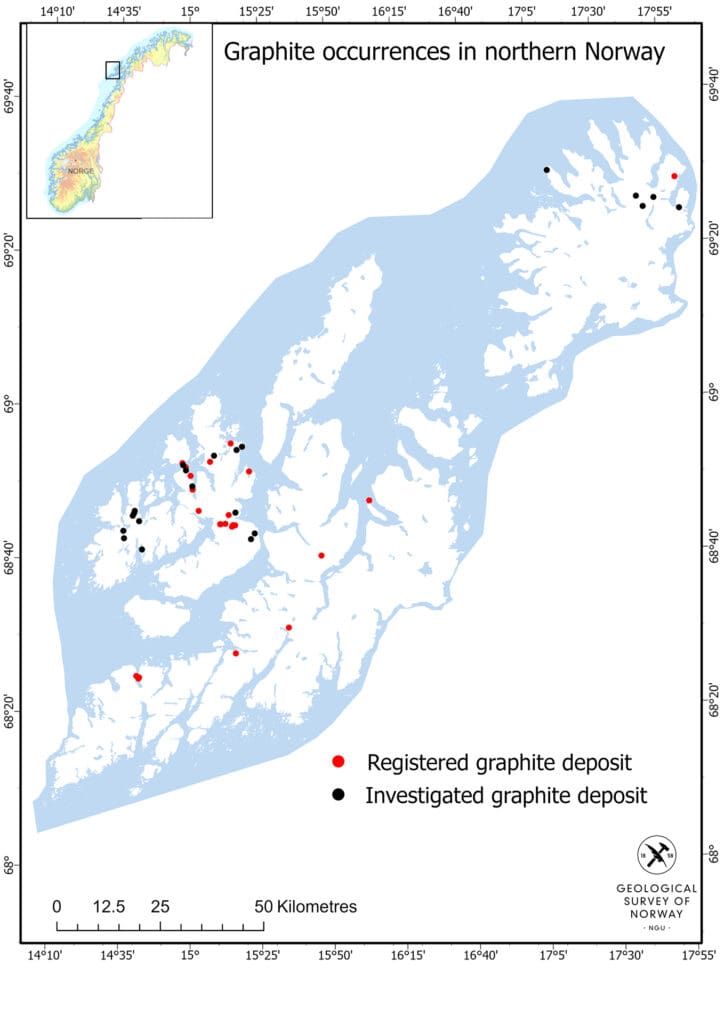
The graphite deposits in northern Norway have been known for a long time; some of them, for instance those in Vesterålen, were mentioned back in the 1850s. Old mine shafts, weathered wooden frameworks, sealed drill holes, and overgrown slag heaps guide us to sites where graphite mining once took place. But since then, our knowledge about and use of the mineral have changed.
Today, graphite has become an attractive mineral, for which geologists are searching once again. It has been classified as a “critical raw material” because of its economic importance and the realisation that changes in geopolitical conditions can make its access uncertain. At Senja in Troms, one of the most important graphite mines in Europe is running today.
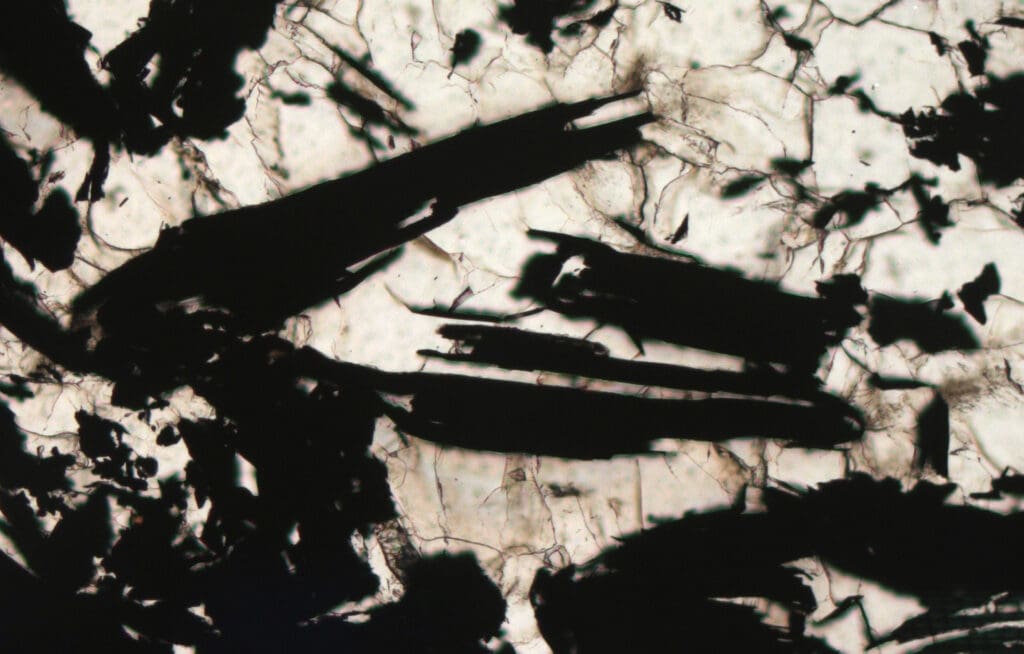
The precursor to graphite is most commonly organic matter formed by photosynthesis. Graphite formation (graphitisation) is essentially a two-step thermal process: at increasing temperatures, non-carbon components (hydrogen and water) are removed first; at temperatures above 700°C all organic matter is converted to graphite. If the graphite is incorporated with other minerals, such as quartz and feldspar, so-called flake graphite is formed. Our work on mineral characterisation and isotopic measurements of graphite in northern Norway confirm this origin. This geological environment is what we find in the gneiss areas of northern Norway, where the rock was formed and transformed at high temperatures deep in the crust millions and billions of years ago.
Traceable under land and water
Graphite deposits are normally hidden in overgrown areas—not only because graphite schist crumbles easily, but also because it often occurs together with carbonate rocks that provide good conditions for vegetation. That is why we need to search to find graphite. Fortunately, modern methods aid us in the search for new graphite deposits.
The Geological Survey of Norway (NGU) has been remapping the graphite deposits in Senja and Vesterålen since 2012. This work is still highly relevant. Graphite is a good electrical conductor. Therefore, geophysical surveys using planes and helicopters carrying equipment to measure electrical conductivity are essential in detecting areas with graphite. Potential graphite zones can be traced through mountains, under marshes, and across fjords. With support from the relevant municipalities, the mineral exploration is followed up on the ground with more detailed investigations, bedrock drilling, and rock sample collection. This work has involved NGU’s geophysicists, mineral resources experts, bedrock geologists, and laboratory scientists working together.
Can’t grow it or hunt it? mine it!
From early historical time bedrock has been used as a resource and has contributed to the development of civilizations. Today, we use raw materials from the bedrock in all parts of modern life, in buildings and transportation, but also in the most everyday tasks. With the current demand for green energy solutions, there is a need for new mineral resources to continue development of our society.
Graphite is used as lubricant, in metallurgic industry, and in the chargeable batteries that power the electric transport revolution. This shiny silver-black mineral is crucial for modern society.
Further reading
Read more about graphite in Norway
Engvik AK, Gautneb H, Mørkved PT, Kneževic Solberg J, Erambert M (2023) Proterozoic Deep Carbon—Characterisation, Origin and the Role of Fluids during High-Grade Metamorphism of Graphite (Lofoten–Vesterålen Complex, Norway). Minerals 13(10):1279
Gautneb H, Rønning JS, Larsen BE (2023) A step towards meeting battery raw material demand: the geology and exploration of graphite deposits, examples from northern Norway. Geological Society, London, Special Publications 526: 251–265,