

The Mohn Prize for 2026 has been awarded to John P Smol for his pioneering research in palaeoecology and his leadership in understanding Arctic environmental change. His studies of the “memory” of Arctic lakes have provided essential tools to detect pollution, climate shifts, and biodiversity loss.
By: Kjetil Rydland // UiT The Arctic University of Norway
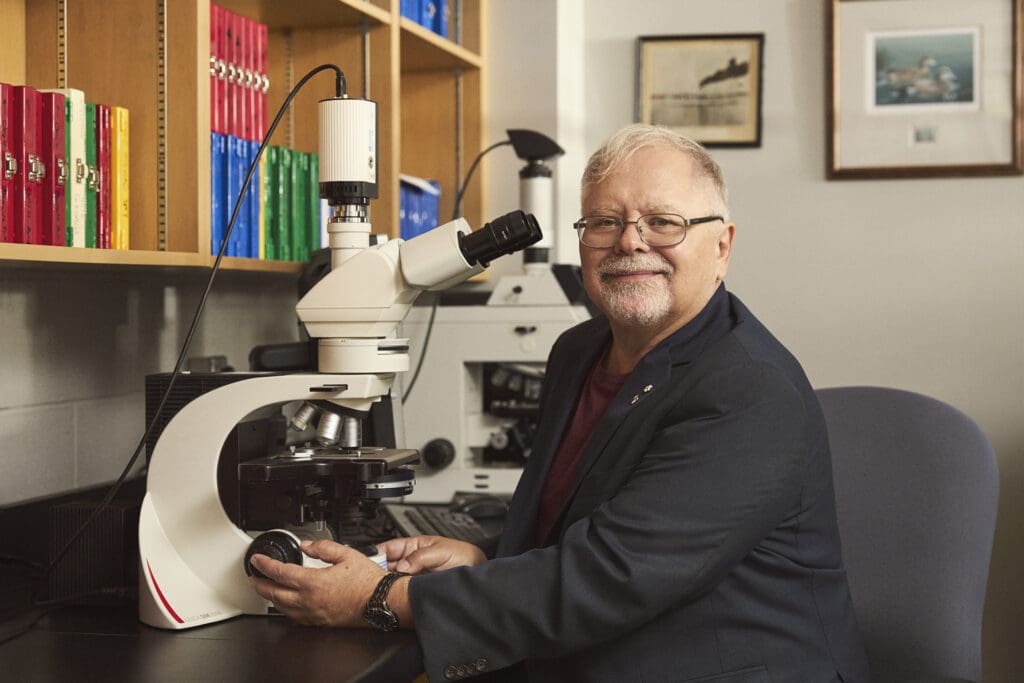
John P Smol has received numerous honorary doctorates, medals, fellowships, prizes and awards. His most outstanding honours and achievements include:
- Distinguished University Professor, Queen’s University, Canada
- Founder and co-director of Queen’s University’s Palaeoecological Environmental Assessment and Research Laboratory (PEARL)
- President of the Academy of Science, Royal Society of Canada (2019-2022)
- Canada Research Chair in Environmental Change (2001–2022)
- Founding editor of the Journal of Palaeolimnology
- Editor-in-chief of Environmental Reviews
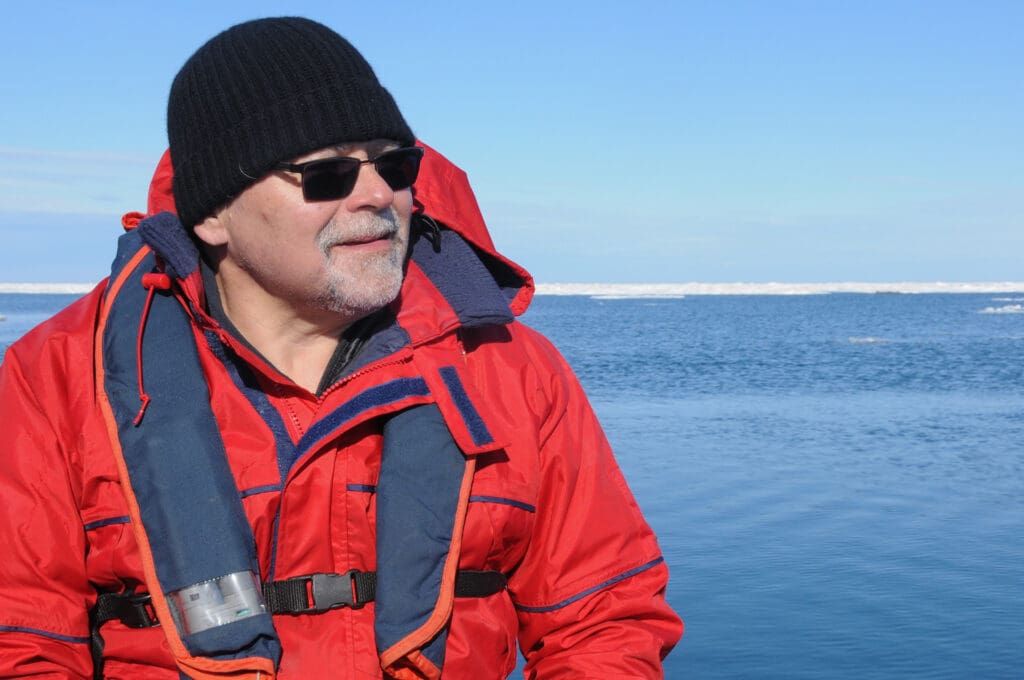
Scientific detective
The Mohn Prize is awarded every two years to recognise outstanding Arctic research that has had significant international impact. Professor Smol earned this distinction by acting as a scientific detective. His crime scenes are Arctic lakes, and his clues are microscopic remnants of life, preserved in layers under these waters.
Because these sediment layers accumulate over centuries, they act like pages in a history book. By “reading” these pages, Smol can reveal how ecosystems looked hundreds of thousands of years ago, providing a baseline to measure how much they have changed due to human activity.
How to measure Nature’s health?
One of the primary reasons the Mohn Prize committee selected Smol is his development of indicators that measure environmental health. Smol’s methods read signals to detect acid rain and industrial pollution, climate-driven shifts in biological communities and early warning signs of ecological disruption before they become irreversible.
His research is not merely academic; it has practical, “real-world” value. His findings have led to evidence-based efforts to combat pollution and have informed international discussions on sustainable development and Indigenous rights in the North.
A leader and collaborator
The committee also highlighted Smol’s role as a global leader and mentor. In 1991, he founded the Palaeoecological Environmental Assessment and Research Laboratory (PEARL), a world-class institution that has trained over 100 graduates to continue vital environmental research.
Smol’s career is defined by an extraordinary level of productivity and influence. He has contributed to more than 700 scientific articles and over 20 books. His work has been published in top-tier journals like Science and Nature and he is a tireless public communicator, helping the general public and policymakers understand complex climate data.
Research matters for the future
The Arctic is currently facing immense pressure from global warming and human activity. The Mohn Prize committee emphasised that Smol’s work is crucial because the future of Arctic freshwaters is highly uncertain. Without the tools he developed, scientists and leaders would be fumbling in the dark when trying to set goals for management, conservation and restoration. By awarding Professor Smol this prize, the international community recognises that the small, often overlooked lakes of the Arctic are actually sensitive archives of our planet’s health. His research ensures that as we move into an uncertain future, we have a clear scientific foundation to protect the water and ecosystems we depend on.