

Researchers have discovered hundreds of methane gas emissions in the fjords around Svalbard. They are now working to understand what controls this activity, and what the findings can tell us about future methane releases in a warming Arctic.
By: Per Olav Solberg // Geological Survey of Norway
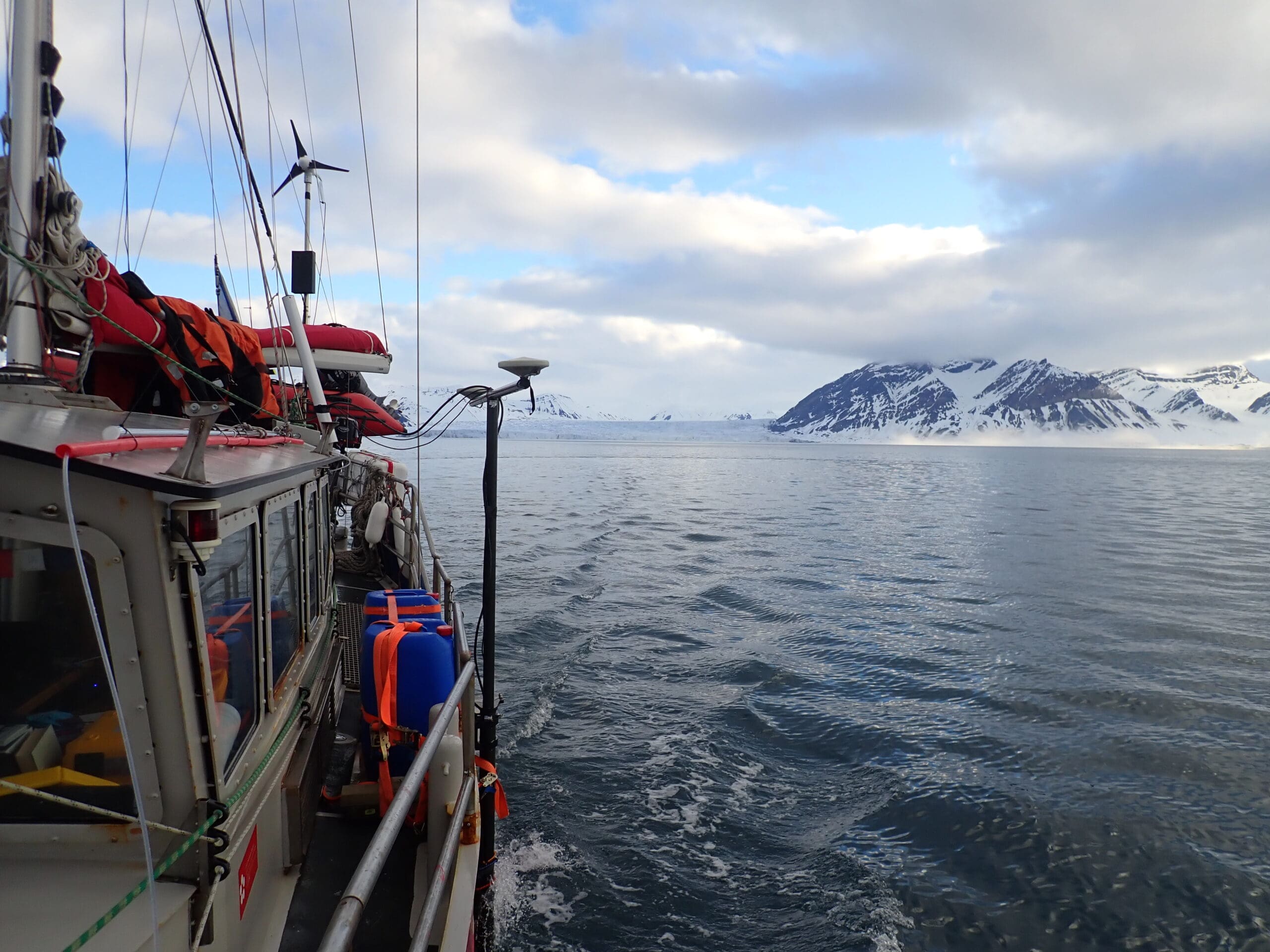
Photo: Nil Rodes / University Centre in Svalbard
In Longyearbyen, temperatures have risen by more than seven degrees over the past 25 years. As permafrost thaws and the landscape changes, researchers are beginning to observe geological dynamics that have long been overlooked. Beneath Svalbard lie significant amounts of natural gas. And in the fjords, where the permafrost “lid” is absent, the gas freely bubbles up to the surface, where it can potentially contribute to further warming.
Hundreds of gas flares found
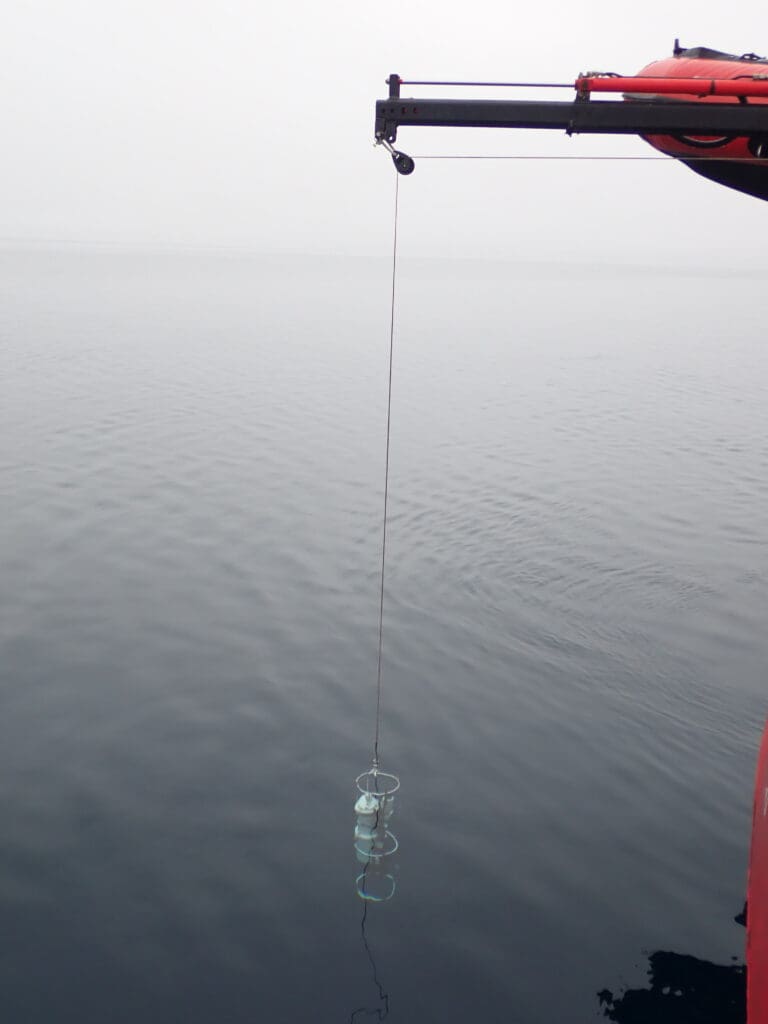
In 2021, master’s student Nil Rodes at the University Centre in Svalbard (UNIS) and researcher Peter Betlem (now at NGI, the Norwegian Geotechnical Institute) chartered a small research vessel. Their goal was to conduct the first natural gas surveys in Isfjorden since 2015. Expectations were low, as the published scientific literature indicated that very few gas seeps had been documented in that area. However, data from a 2015 research cruise led by the Center for Marine Environmental Sciences at the University of Bremen (MARUM) suggested otherwise. With simple instruments and measurements funded by an Arctic Field Grant from the Research Council of Norway, Betlem, Rodes, and their team confirmed that the fjord was indeed full of gas seeps.
“We found hundreds of flares across the entire fjord. The geological system beneath Svalbard is far more active than we previously thought,” says Betlem.
The findings not only challenged the existing literature but also raised a series of fundamental questions that had not been addressed previously. Betlem describes it like this:
“We saw hundreds of flares, but we had no idea what was driving them. How deep was the gas coming from? How much was escaping? Was there temporal variation? And why did some flares pulse and disappear within hours?”
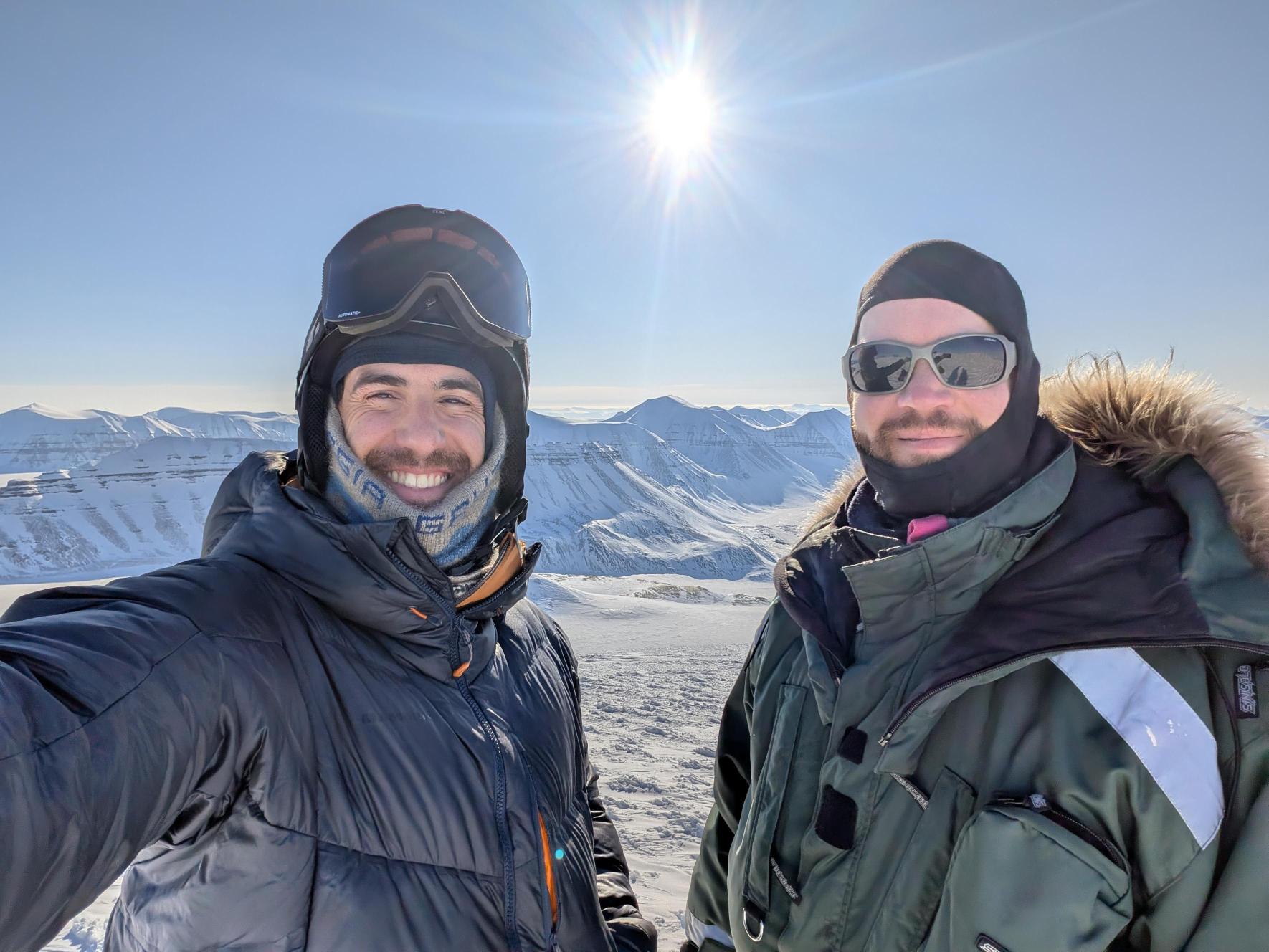
Photo: Nil Rodes / University Centre in Svalbard
A system in constant change
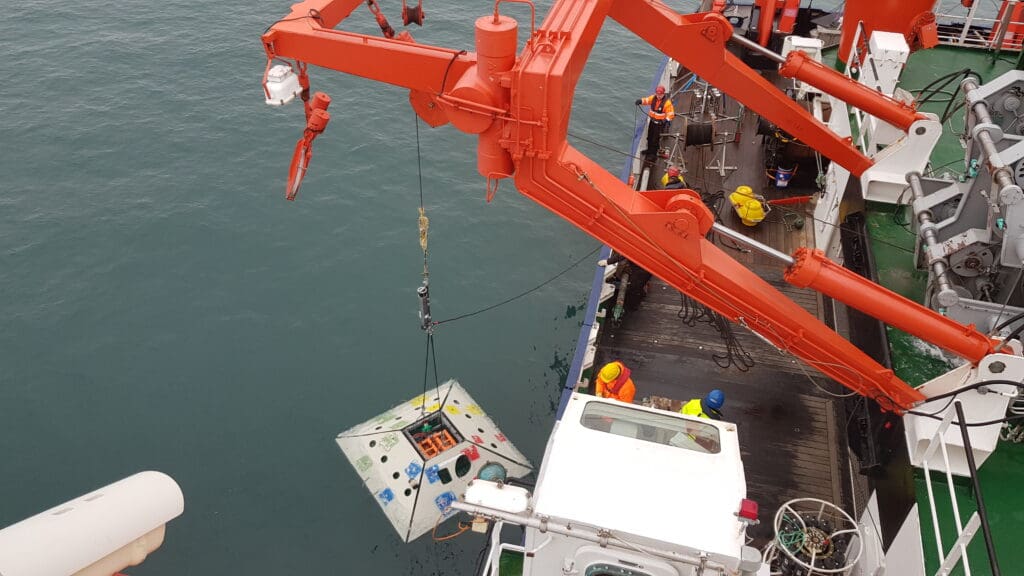
The research team also lacked answers on whether the variations were linked to temperature changes, pressure changes, potential gas hydrate dissociation, or specific structures in the bedrock. These knowledge gaps necessitated further investigation, and the proof-of-concept study led to a joint MARUM–UNIS research cruise in September 2023 on board Germany’s Heincke research vessel–the same vessel as in 2015. This time, the objective was to systematically survey Svalbard’s western fjords for further evidence of seepage. Building on data from all three surveys, Rodes recently initiated a PhD project to investigate the extent of seepage and the reasons behind the dramatic variation in methane emissions.
“We know that there is a lot of gas, and we know that it escapes into the fjords. But we still don’t know what actually controls the variability across the fjord,” says Rodes.
Seeing things we cannot see on land
Rodes’ PhD is part of an international collaboration, including NGI, UNIS, MARUM, UiT The Arctic University of Norway, and the University of Barcelona. The goal is to understand what fluctuations in the fjords reveal about the processes unfolding beneath the permafrost on land.
“The geology is the same, and the petroleum system is the same. Having said that, it is challenging to measure gas escape directly on land,” Rodes explains.
In the fjords, however, the researchers can literally observe the bubbles escaping from the fjordbed. This active seepage allows testing hypotheses about pressure, temperature, gas hydrates, and faults and fractures that may act as pathways for gas migration.
“The fjords act as a natural laboratory. They help us understand conditions beneath the permafrost without drilling or excavating into the tundra,” says Betlem.
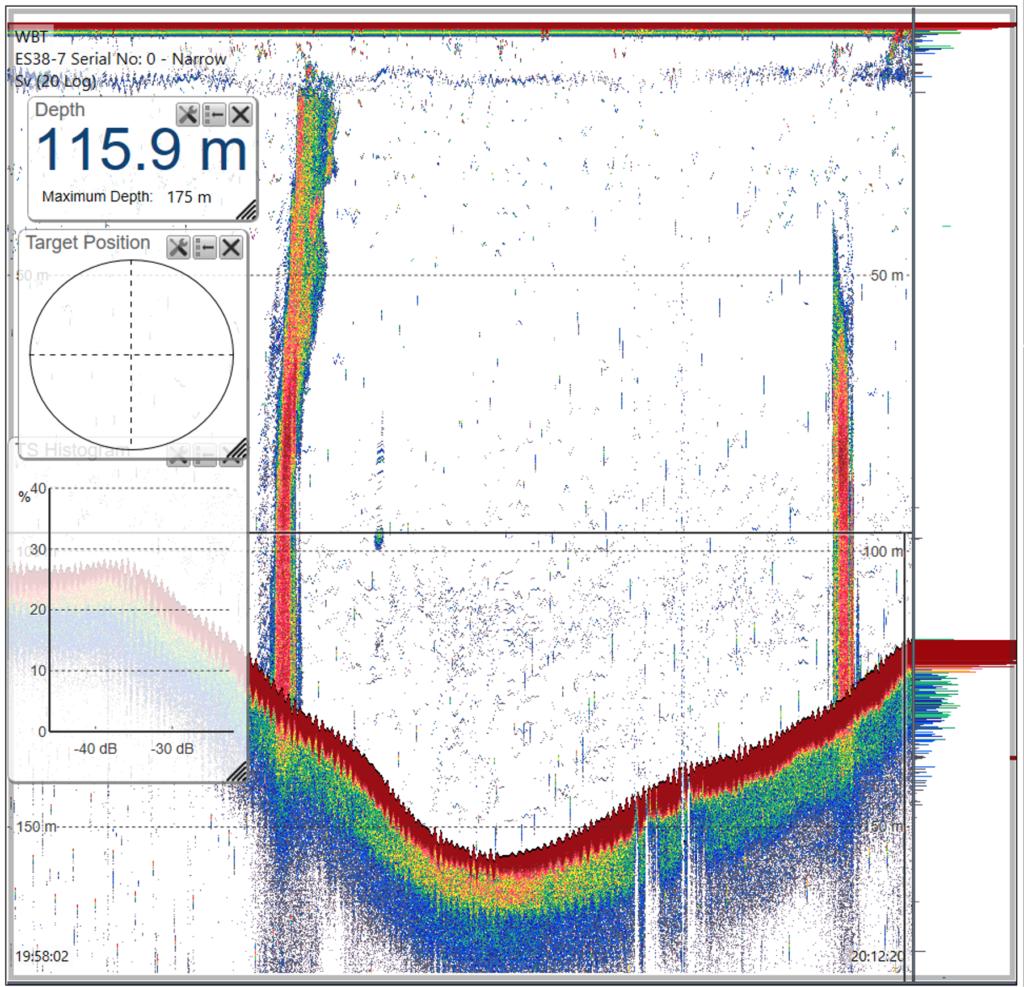
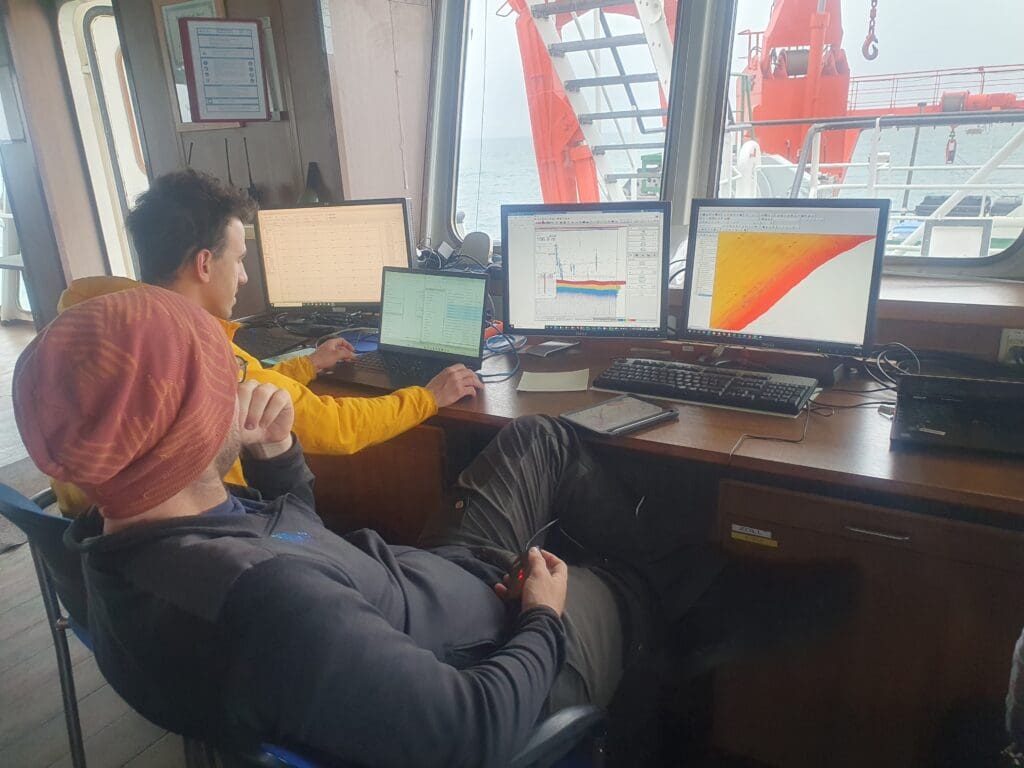
Photo: Miriam Römer / University of Bremen
Methane in the Svalbard fjords
The findings:
Hundreds of methane gas seeps have been recorded in the fjords around Longyearbyen. The greenhouse gas effect of CH4 is 25 times higher than that of CO2.
Why emissions occur at sea:
The permafrost layer, which acts as a barrier to upward fluid migration on land, is largely absent in the fjords, allowing gas to escape more easily.
The situation on land:
Boreholes show significant amounts of gas beneath the permafrost, but researchers still know little about how, if, and when this gas might begin to leak.
Why fjords are essential to study:
Fjords offer a unique window into processes that are difficult to observe on land. The permafrost acts as a tight lid on the tundra; in the fjords, that barrier is absent, and the gas may escape..
Does this matter for the climate?
Methane has a 25 times stronger greenhouse gas effect than CO2. In deep fjords, some of the methane dissolves and reacts with oxygen in the water, breaking down, and thus little—if any—of it reaches the atmosphere. However, in shallower areas, such as those closer to shore, the opposite occurs: methane may escape directly into the air because it doesn’t have time to dissolve in the water column.
Today, researchers estimate that methane emissions from groundwater springs formed after glacial retreat (so-called glacial forefields) already account for around 10% of Norway’s annual energy-sector emissions.
“We know that methane exists beneath the permafrost on land; numerous boreholes have confirmed it. The big question is how a weakening permafrost barrier will affect potential leakage pathways,” says Betlem.
An urgent research challenge
This is not about the entire permafrost system collapsing at once. Even in a rapidly warming Arctic, the thickest permafrost layers in the mountains are expected to remain intact for centuries. The real risk lies elsewhere: in the localised weaknesses that can form long before the main body melts.
“In Svalbard’s valleys, the permafrost is relatively thin and young, in places only a few thousand years old, and therefore much more vulnerable to warming and degradation,” says Betlem.
Here, minor breaches in the permafrost (so-called taliks) can form over years or decades, and even more rapidly in front of retreating glaciers. Such early openings may create new pathways for methane to rise to the surface and, in the worst case, trigger reinforcing local processes.
“Once cryosphere degradation begins to break up the permafrost lid, the process can reinforce itself and set off a chain reaction. This is what we are trying to understand before it happens,” he explains.
For Rodes, the PhD project is ultimately about giving both scientists and society a stronger foundation for decision-making.
“When we understand the fjords better, we can also understand what might happen on land, and what we risk in a rapidly warming Arctic,” Rodes concludes.
Further reading
Birchall T, Jochmann M, Betlem P, Senger K, Hodson A, Olaussen S (2023) Permafrost trapped natural gas in Svalbard, Norway. Frontiers in Earth Science 11: 1277027
Hodson A, Kleber G, Platt S, Kalenitchenk, D, Hensgens G, Fynn T, Senger K, Tveit A, Øvreås L, Ten Hietbrink S, Hollander J, Ammerlaan F, Damm E, Römer M, Fransson A, Chierici M, Delpech L-M, Pirk N, Sen A, Redeker K (2025) Methane in Svalbard (SvalGaSess). In: Runge et al (eds) SESS report 2024, Svalbard Integrated Arctic Earth Observing System, Longyearbyen, pp 106-137,
Rodes N, Betlem P, Senger K, Römer M, Hodson A, Liira M, Birchall T, Roy S, Noormets R, Smyrak-Sikora A, Olaussen S, Bohrmann G (2023) Active gas seepage in western Spitsbergen fjords, Svalbard archipelago: Spatial extent and geological controls. Frontiers in Earth Science, 11: 1173477,