

Donald Trump is not the first to set his sights on the vast ice island in the northwest Atlantic. Norway too has an imperialist legacy. And when Norway was vying for control over part of Greenland, scientists played a key role.
By: Harald Dag Jølle // Norwegian Polar Institute
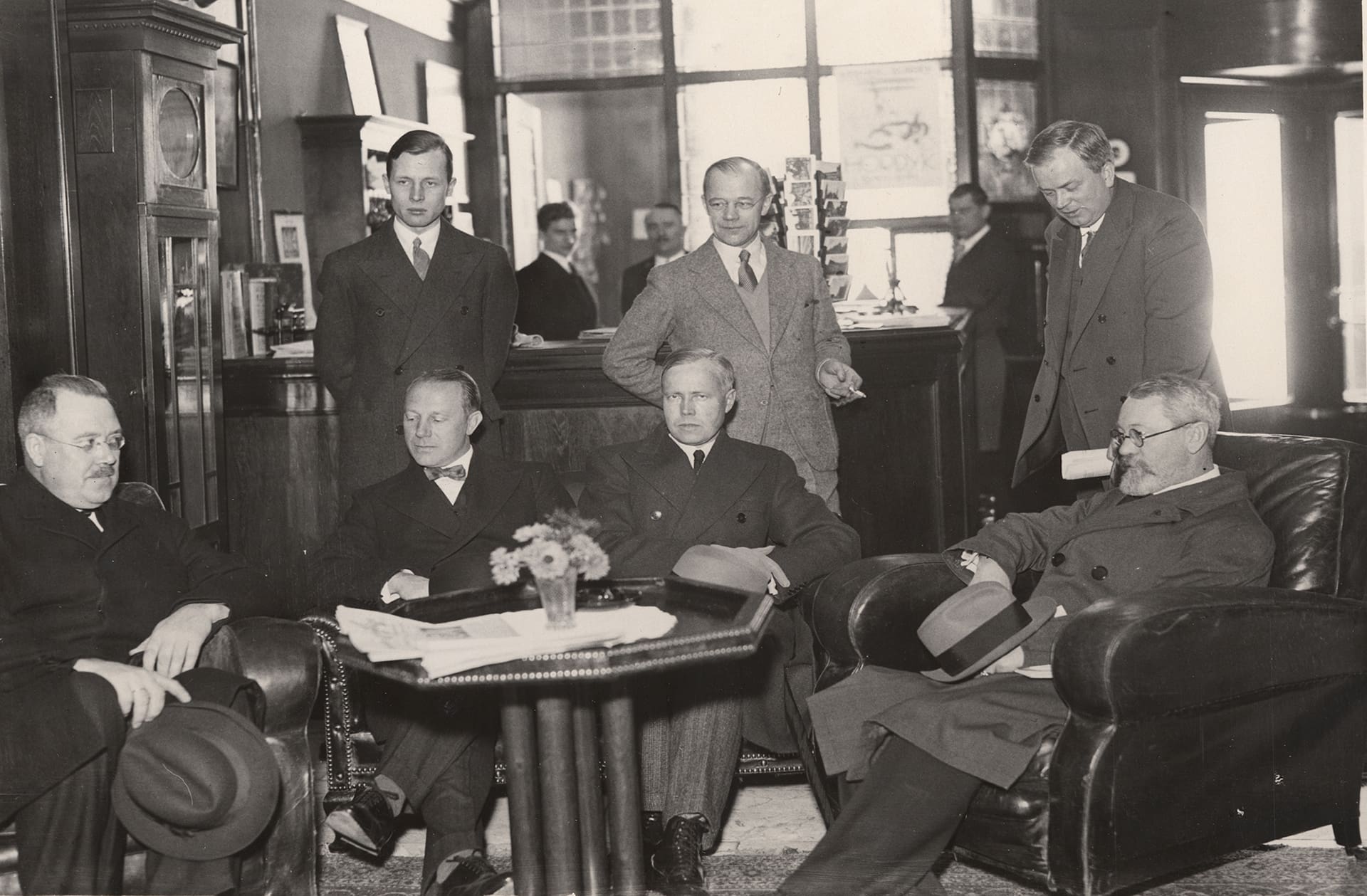
During the peace negotiations after the First World War in 1919, the Danish Foreign Minister contacted his Norwegian counterpart, Nils Claus Ihlen. Denmark was soliciting international support for extending its sovereignty to all of Greenland, not just the colonies on the west and southeast coasts. In 1916, the United States had consented to Danish control as part of the deal when the US bought the Danish West Indies. Now the Danes wanted to know how Norway would react to their bid for full sovereignty over Greenland. The Norwegian Foreign Minister stated that Norway would not oppose it, as long as Denmark supported Norway’s desire for sovereignty over Spitsbergen. Norway attained that goal the following year, when the Spitsbergen Treaty was signed.
In 1921, when the Danes celebrated the bicentenary of the arrival of missionary and coloniser Hans Egede in Greenland, Denmark proclaimed that it had now extended its sovereignty to the entire island. At the same time, they declared that the Danish monopoly, as practised in the colonies on the west coast, would now also apply to the east coast.
Denmark had tried to persuade Norway to endorse Foreign Minister Ihlen’s pledge in writing, but the Norwegian authorities had replied that they could not accept an extension of Danish sovereignty if it meant that Norwegians lost the right to hunt and fish in East Greenland. The Danes were not willing to make any such concession and went ahead with their claim, relying on Ihlen’s spoken pledge from 1919 as a sufficient guarantee of the Norwegian position.
A sense of historic injustice
In Norway, the Danish declaration of sovereignty was widely seen as a provocation. Many Norwegians strongly believed that their country had been shortchanged during the dissolution of the Norwegian–Danish political union in 1814, when the colonies established under the Norwegian–Atlantic empire in the Middle Ages, including Greenland, Iceland and the Faroe Islands, had ended up under Danish control. This was an injustice that some believed had to be rectified by Norway reclaiming the whole of Greenland.
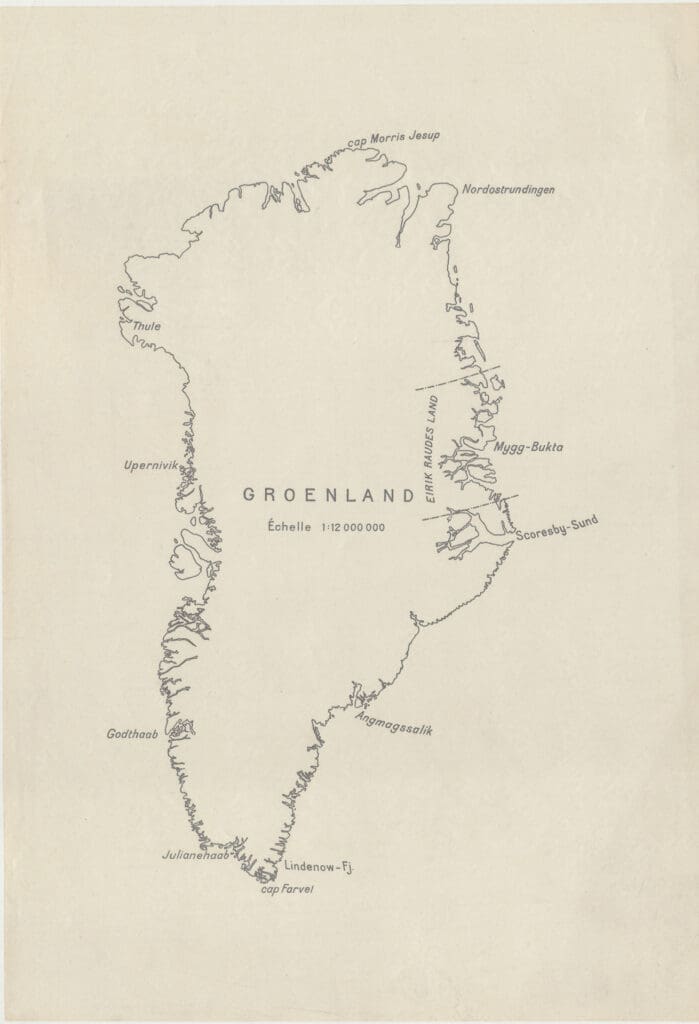
Admittedly, few argued in favour of such radical action. History professor Halvdan Koht asserted, for example, that in the compensation settlement with Denmark in 1821, Norway had accepted that the colonies in West Greenland became Danish. It was unfair, and a bitter pill to swallow, but little could be done about it under international law. On the other hand, East Greenland, according to Koht, was “unoccupied land”. But if the Danes insisted on their claim to sovereignty over the whole of Greenland, Koht said, it was undoubtedly Norway that had rights to East Greenland.
Denmark and Norway commenced negotiations on the issue, and Koht, who later became the Norwegian Foreign Minister, was a member of the Danish–Norwegian commission that agreed on an interim solution in 1924: the Norwegians would be permitted to hunt, trap, mine, and engage in other gainful activities in East Greenland for 20 years, until 1944, but must defer settlement of the issue of territorial sovereignty.
Increased research activity
This temporary and unresolved solution led to both Norway and Denmark stepping up their economic and scientific activity on the northeast coast of Greenland.
In 1924, for example, the Danish polar explorer Ejnar Mikkelsen led a relocation operation in which seventy men, women, and children from Ammassalik in Southeast Greenland emigrated 1,000 kilometres further north, to the area that Norwegians had declared uninhabited. In fact, there had long been plans to establish a colony at the mouth of the Scoresbysund fjord, but the sudden implementation of those plans was undoubtedly a direct consequence of the dispute with Norway, and the Danes’ desire to demonstrate their sovereignty.
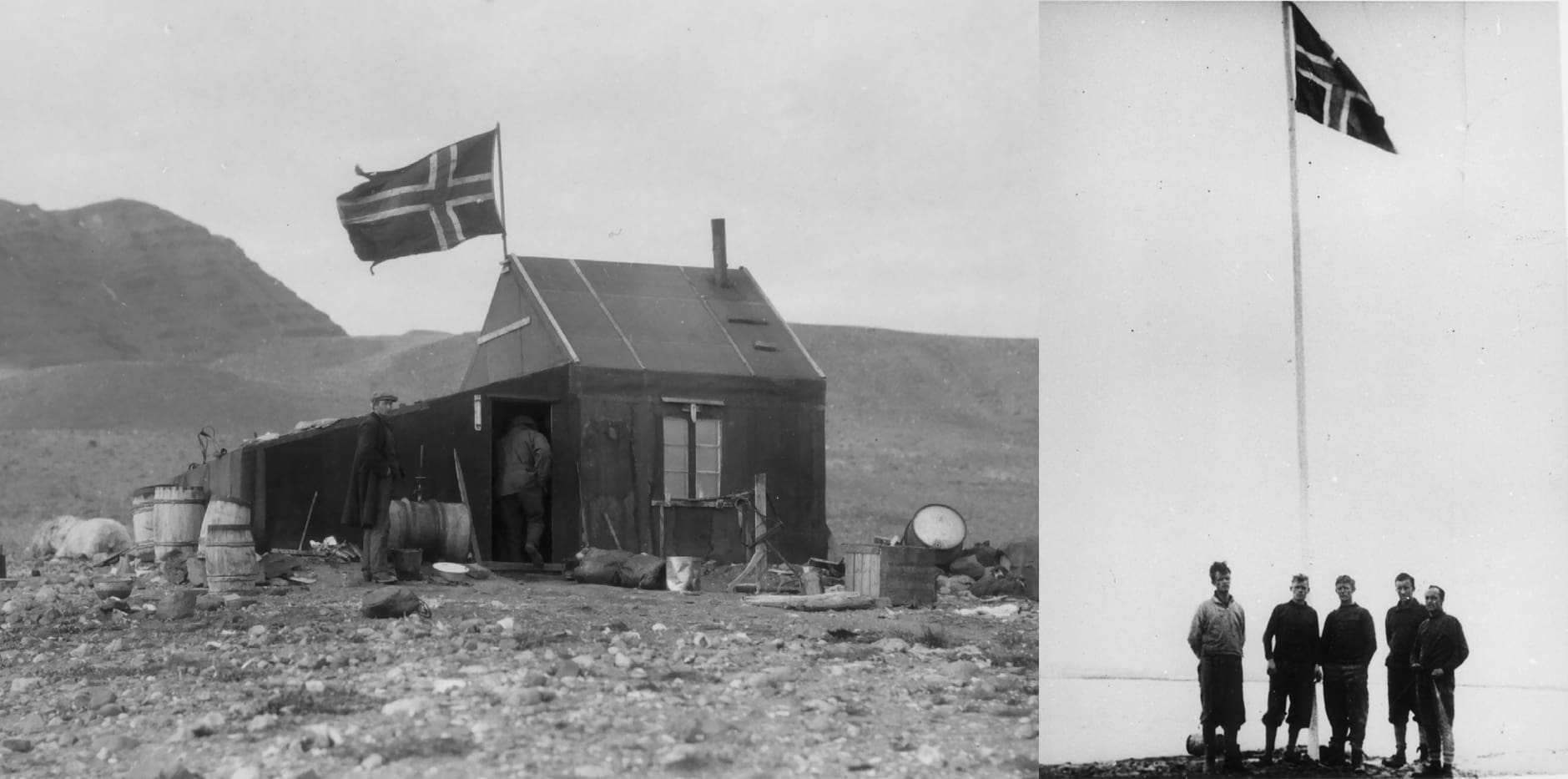
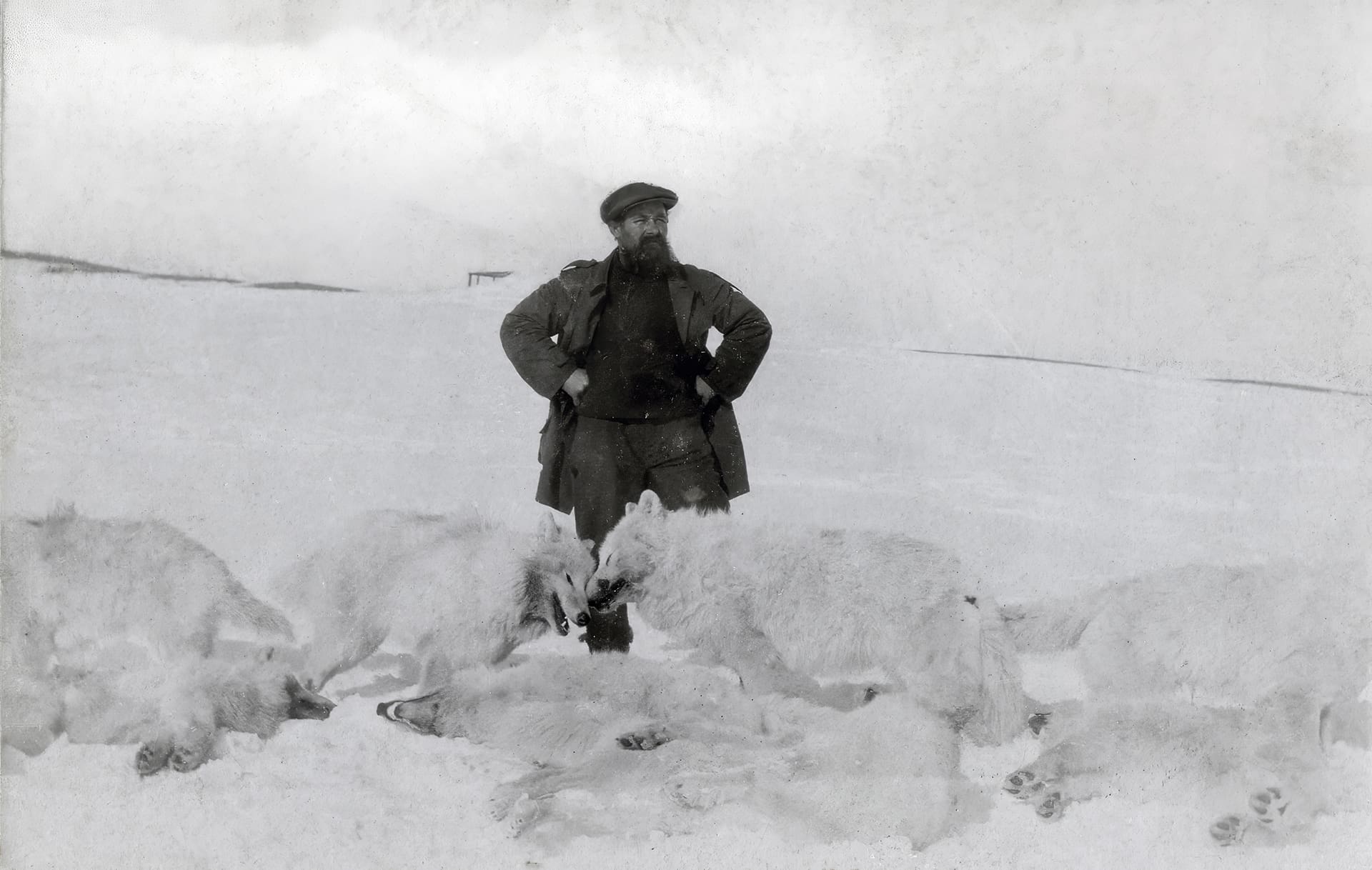
Norway, for its part, launched annual research expeditions to Northeast Greenland, which from 1928 were organised by the newly established Norwegian Svalbard and Arctic Ocean Survey (the forerunner of the Norwegian Polar Institute), led by Adolf Hoel. At the same time, several hunting and trapping expeditions were equipped to winter on Greenland. The Geophysical Institute in Tromsø maintained the manned meteorological station in Myggbukta, which had been set up in 1922. And in 1929, Norway founded its own trading company for East Greenland. Denmark did likewise. In 1930, Norway’s Svalbard and Arctic Ocean Council advocated that Norway should occupy the part of East Greenland that they considered a no-man’s land, or, to use the imperialist term, a terra nullius.
The government did not agree to this, but gave three people (one of whom was Adolf Hoel) police authority over the Norwegians staying in the area. Shortly afterwards, it became known that Denmark would be sending the renowned polar researcher and geologist Lauge Koch northward at the head of an ambitious three-year scientific expedition. This major Danish initiative made Norwegian Greenland agitators and scientists nervous. They feared that a large-scale expedition would underscore Denmark’s interests in the territory, giving the Danes a significant advantage in the court case that many believed would be needed to settle the issue of sovereignty. But despite strong exhortations, the Norwegian government stood by its decision not to occupy any territory.
But now the patience of the Norwegian agitators led by Hoel was running out. They were not going to stand by and watch Denmark claim what they believed was Norwegian territory. To put further pressure on the government, they sent a coded telegram to Myggbukta. As a result, on 27 June 1931, five Norwegian trappers occupied a tract of land north of Scoresbysund.
Erik the Red’s Land
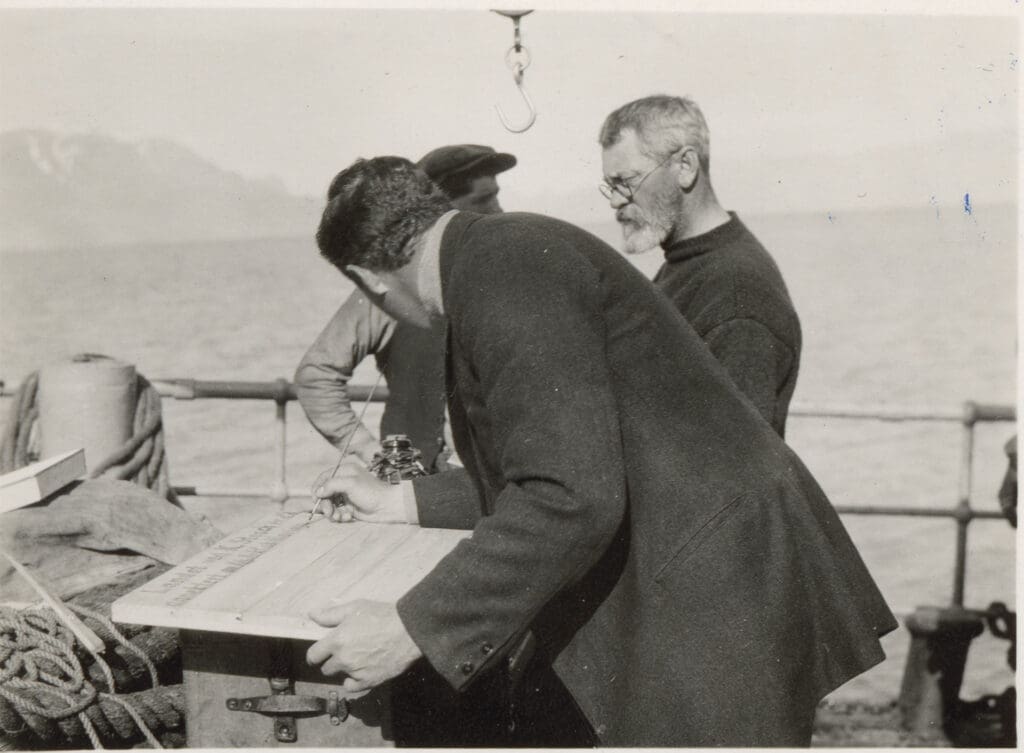
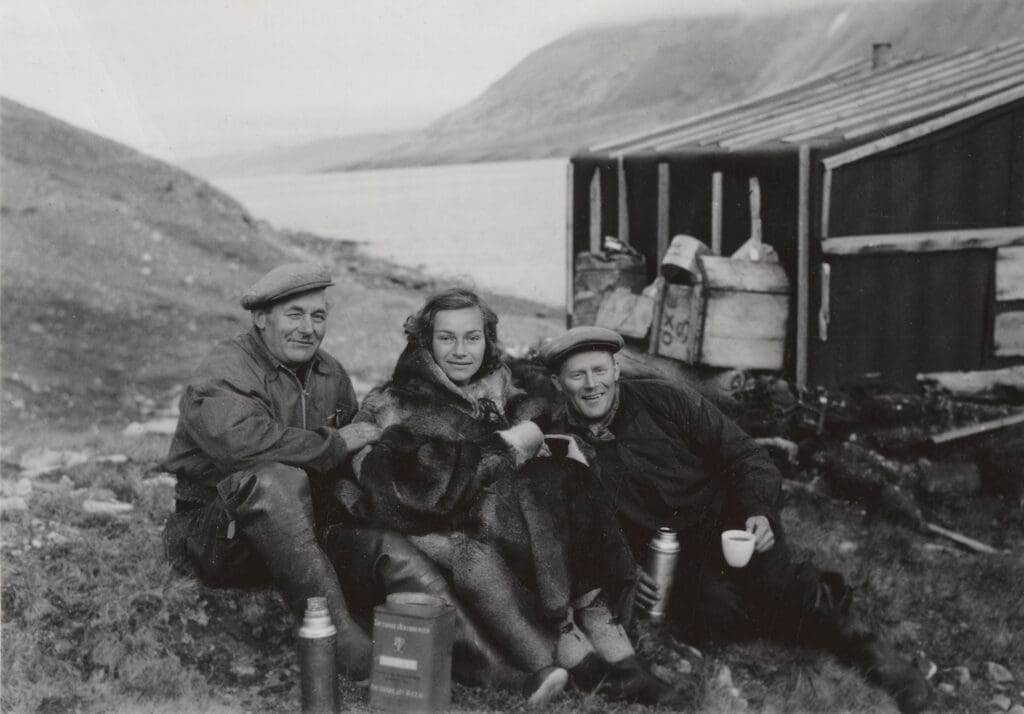
The actual occupation amounted to no more than the men exiting their cabin to raise the Norwegian flag and remove their hats. Using a string attached to the camera, they took a selfie so that all five occupiers would be included in the photo. They then went back into the station and signed a declaration that translates as: “On this day, at 5 pm, we raised the Norwegian flag and took possession of the territory from the Carlsberg Fjord in the south to the Besselfjord in the north in the name of HM King Haakon VII, and called it Erik the Red’s Land.” The declaration was telegraphed to a number of Norwegian newspapers.
This was a big event for the five winter trappers, but there was little revelry in Myggbukta. The two-year expedition was almost at an end, and they had run out of every kind of treat. Even coffee.
The telegram from Myggbukta sparked a heated debate back in Norway. But this pressure gambit undoubtedly had the intended effect. A fortnight later, on 10 June 1931, the government went ahead with a formal occupation of the defined territory. The following day, Denmark took Norway to the Permanent Court of International Justice in The Hague.
The trial in The Hague
Norway asserted that the occupation was valid under international law. Its case for this was essentially as follows: By 1814, the west coast of Greenland had been colonised from the southern tip to 73 degrees north. In 1894, the colony of Angmagssalik on the southeast coast was included, and by 1905, Danish rule on the west coast had been extended north to 74° 30’. “Apart from that: No Danish colonisation”, as it was worded in a memo for the proceedings in The Hague. According to the Norwegian lawyers who argued the case, any territory that was not colonised counted as terra nullius. They asserted that this was widely accepted. Otherwise, they asked rhetorically, why would Denmark have embarked on its diplomatic campaign in 1916 to have an extension of sovereignty recognised? Further, they asserted that what Foreign Minister Ihlen had said could not be construed as anything more than an “offhand comment”. At the same time, they claimed that the Danes had acted unfairly by not informing Norway that they would extend their monopoly to the east coast as well.
From the Norwegian point of view, the occupation was therefore not only justified, it was also necessary; the issue of sovereignty had not been resolved in the East Greenland Agreement of 1924, and the territory could not continue to be a terra nullius “because then the dispute would become permanent”. A Norwegian occupation was also essential in preventing Lauge Koch’s expedition from resulting in Danish occupation. In other words, it was emphasised, the Norwegian action was the only way to secure Norwegian trapping interests for the future.
However, the arguments were not compelling enough to convince the judges in The Hague, who handed down their verdict on 5 April 1933. On that same day, a telegram arrived at the Antarctichavn trapping station on the east coast of Greenland, where the famous trapper, author, and lawyer Helge Ingstad had held sway as Norwegian governor since 1932. It read: “Norway lost the Greenland case before The Hague Tribunal on all counts.”
Interpreting the Greenland issue
What was the Norwegian policy on Greenland an expression of? Should we view Norway as an aggressor against a neighbouring country? Or should we see both the Danish and Norwegian actions as two imperialist states seeking to deprive the Greenlanders of their land? And was the Norwegian position that this coast was uninhabited and thus a terra nullius any more unreasonable than the Danes’ alleged right to roll out colonial rule to the whole of Greenland?
I will refrain from passing judgement on who was right in this dispute. The judges in The Hague did that in 1933. My point is that the Greenland case was not as extraordinary as was subsequently claimed. The leading Norwegian international law experts at the time asserted that Norway had the right to occupy the disputed territory, and up until the occupation, Norway had largely followed the same procedure as in Svalbard, Jan Mayen, and Antarctica, and attempted to follow in Franz Josef Land. This confluence of science, politics and trade has often been characterised as Arctic imperialism, a strategy for which Adolf Hoel provided the following formula: “The first tactic is to send out research expeditions.” The second is to establish “scientific and humanitarian stations and facilities such as meteorological stations”. Next, Hoel believed it was important to encourage and support “economic enterprises”. Finally, one should “campaign at home and abroad in order to promote one’s goals, which should then be promoted as endeavours for the country’s progress”.
The extraordinary aspect of the Greenland case in the history of Norwegian polar politics is that a private occupation led to a formal occupation, which then ended up in The Hague for a final ruling.