

The algae that live in sea ice support life across the Arctic Ocean. But how will their frozen world respond to the warming climate? Drift studies aboard the RV Kronprins Haakon help us find the answer.
By: Karley Campbell, Anne Braakmann-Folgmann, Zoe Koenig, Christien Laber, Rosalie McKay and Catherine Taelman // UiT The Arctic University of Norway
Polona Itkin and Megan Lenss // Norwegian Polar Institute
Michele Fabris and Luca Morelli // University of Southern Denmark
Janina Osanen // Norwegian University of Science and Technology
Benjamin Lange // Norwegian Geotechnical Institute
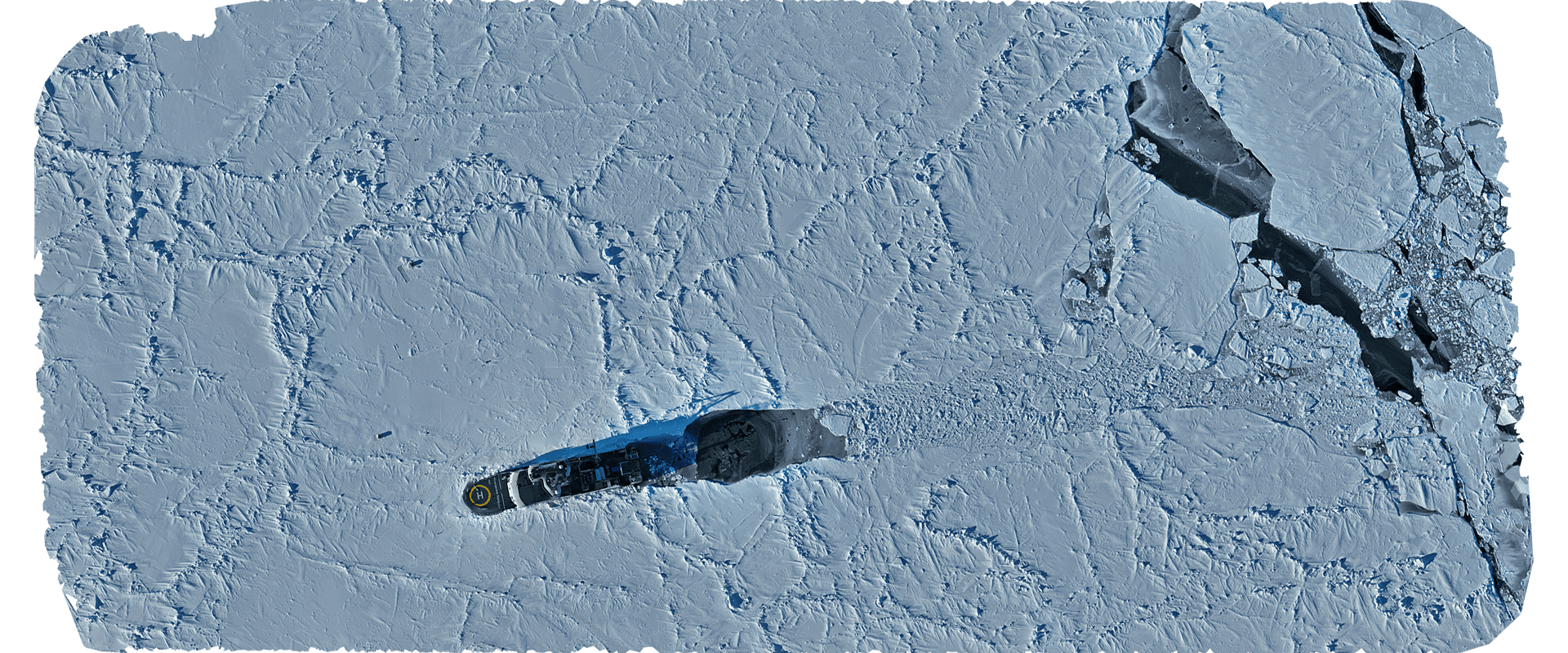
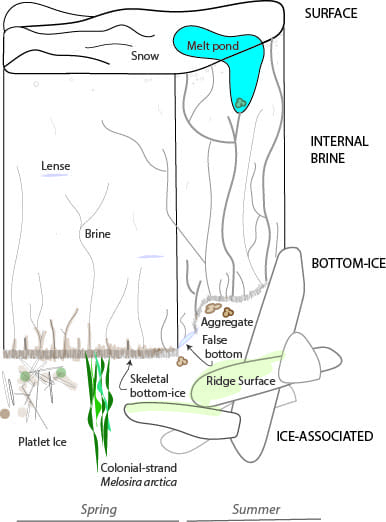
Sea ice blanketing the Arctic Ocean seems a barren place but look closer—much closer—and you will find a thriving world of microorganisms. The uniquely adapted algae of sea ice perform photosynthesis, and in doing so, produce compounds that feed aquatic life, from swimming zooplankton and ultimately to the mighty polar bear. But sea ice is a dynamic landscape. It is a combination of snow, ice and liquid brine that responds to seasonal warming and the conditions of the ocean below it. This has made it difficult to understand the complex relationships between ice algae and their environment. At the same time, amplified global warming in the Arctic is rapidly changing the icescape. So, what is the future of ice algae in the Arctic marine ecosystem?
This question has been at the centre of the projects BREATHE (Bottom sea ice Respiration and nutrient Exchanges Assessed for THE Arctic) and Micro-SHIFT (Microbial life of Sea ice Habitats Investigated for The Arctic), led by Karley Campbell at UiT The Arctic University of Norway. Together with other sea-ice-focused colleagues, she has completed the first drift studies of RV Kronprins Haakon to help provide answers.
Drifting for answers about sea ice
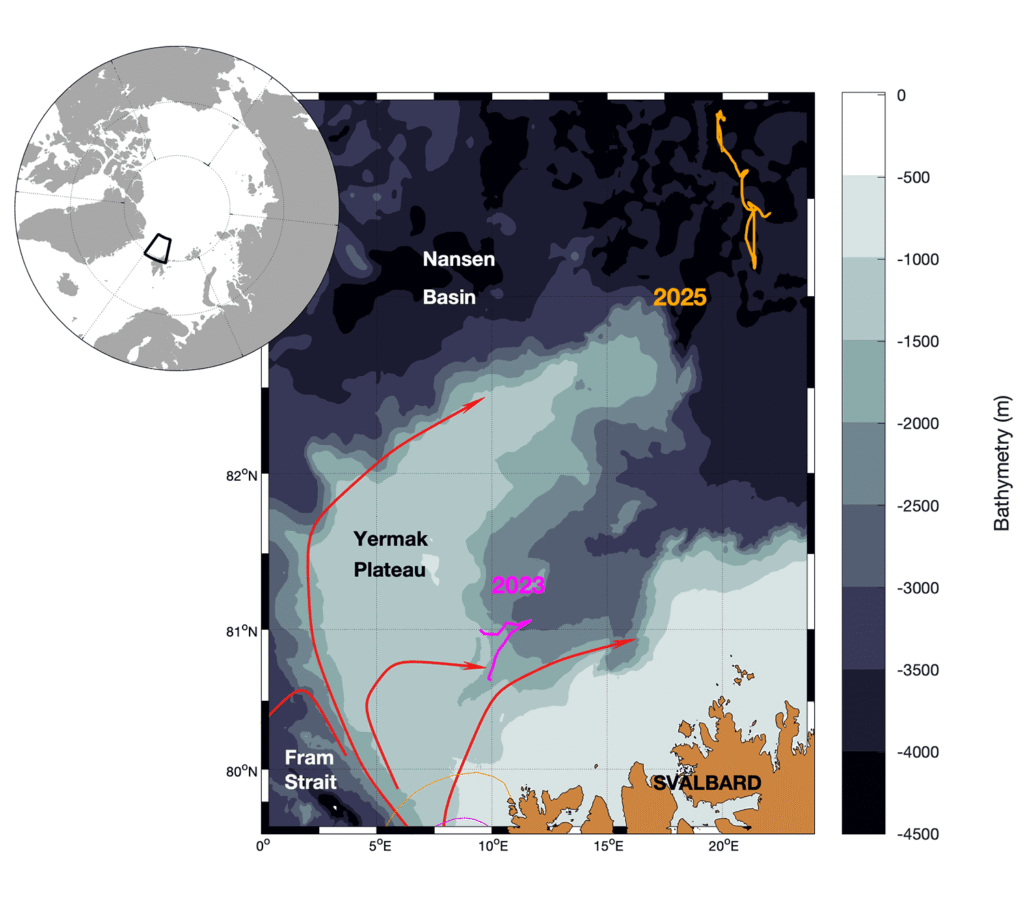
“In a drift you attach the ship to a single ice floe and essentially let nature decide where you will go,” says Campbell.
Drifting around the Arctic Ocean largely at the whim of winds may seem like a wasted opportunity when compared to the targeting of specific locations that is more typical of research voyages.
“On the contrary,” says Campbell, “the slow drift gives us time to do in-depth work across time and space that is just not possible with other cruises.”
The BREATHE and Micro-SHIFT drifts on RV Kronprins Haakon have been relatively short, on the order of weeks, with optimised sampling for a magnified view of biological processes. The insights are nonetheless revealing. For example, the team found a lot of Pseudonitzschia algae in the sea ice during the 2025 Micro-SHIFT drift. These algae could produce a neurotoxin that affects other life forms in the ecosystem, but the analysis done so far in the lab of Michele Fabris has shown that this may not be happening within the ice—at least not under the conditions of this drift.
Training the next generation of sea-ice researchers
The impact of drift studies on RV Kronprins Haakon goes beyond the unique datasets that they have created.
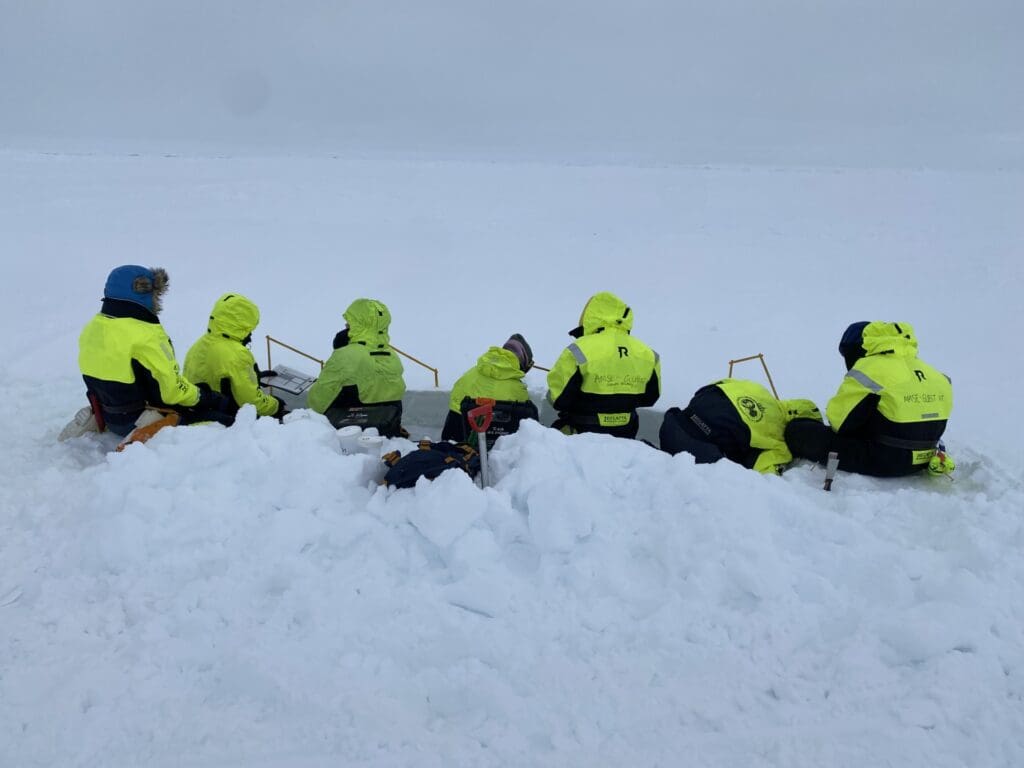
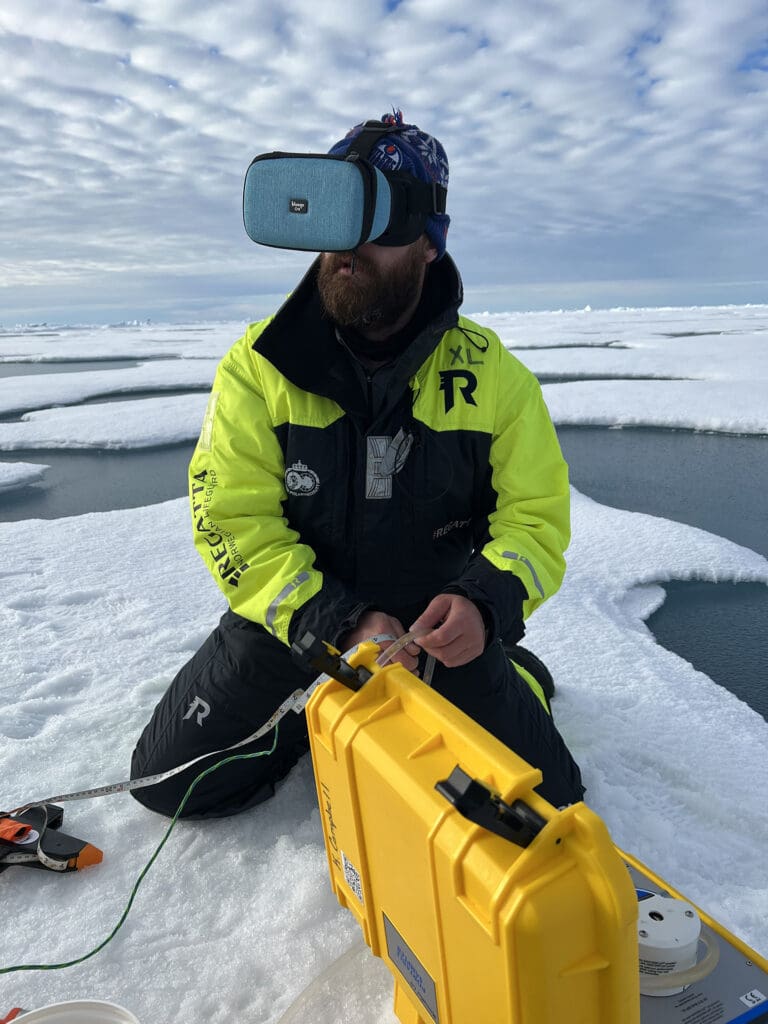
In 2023, the SiDrift project paired with BREATHE to create a floating classroom as part of the drift study. In total, 23 early career researchers joined from over 20 countries as part of a field school. Instructors in biology, physics and oceanography from UiT The Arctic University of Norway and the Norwegian Polar Institute routinely took the classroom onto the ice, putting theory into practice. Participants received training that will help to propel sea-ice research into the future.
Algae hunting in the High Arctic
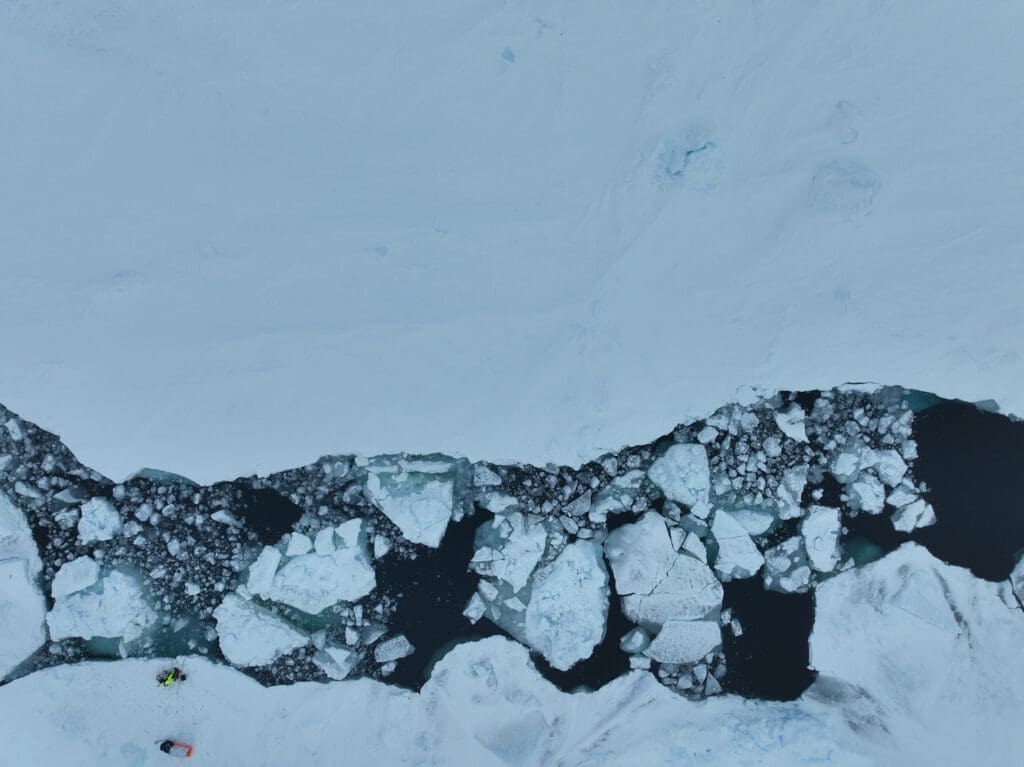
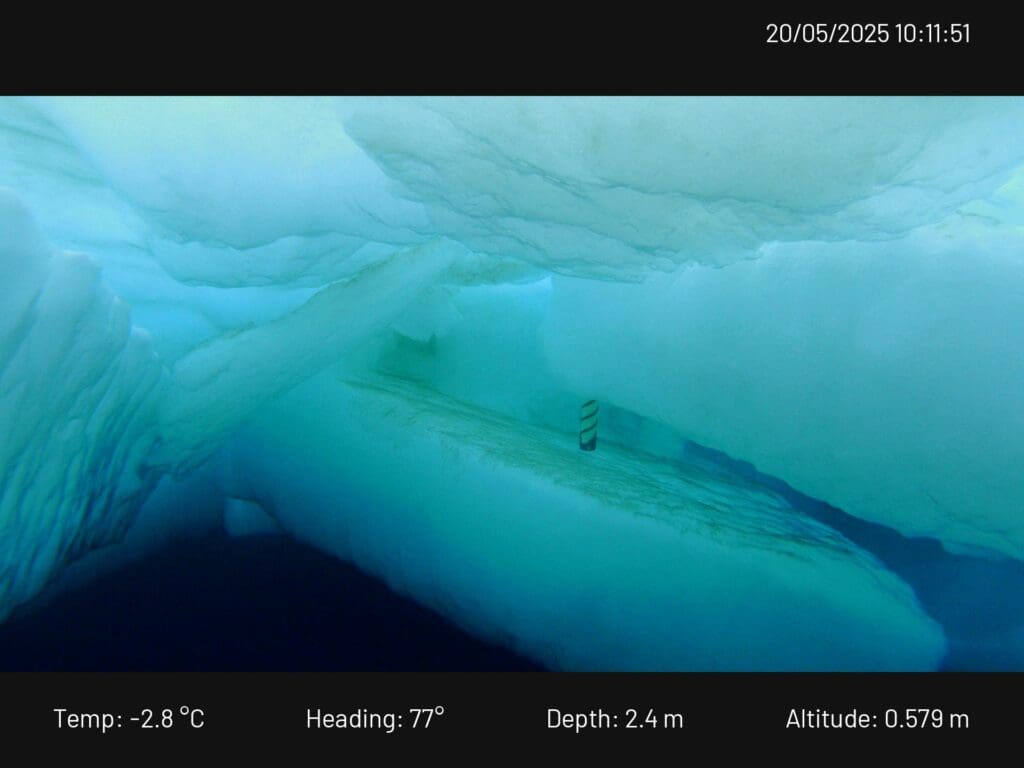
Most of the research on sea-ice algae has focused on the few centimetres of ice in contact with the ocean. This is where highly productive diatoms accumulate in spring when daylight returns to the Arctic. But during the maiden voyage of RV Kronprins Haakon to the North Pole in 2022, Campbell and colleague Benjamin Lange noticed something. Most of the algae were not in the bottom-ice. Instead, the algae were concentrated in the form of floating masses beneath the ice, known as aggregates, or in the deformed ice of ridges that can be metres thicker than the surrounding level ice, and have a much more complex geometry. These often-overlooked biological hotspots—the Arctic’s hidden gardens—might have an important role in determining the biodiversity and productivity of sea ice algae.
“Knowing the gardens were there was one thing. Sampling them was quite another,” says Lange.
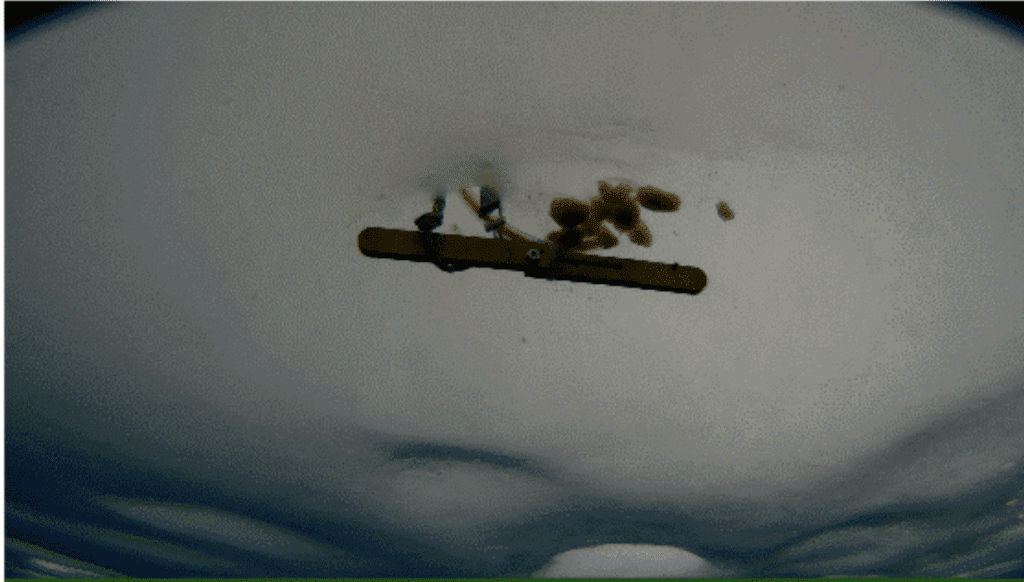
With some quick thinking and the use of a remotely operated underwater vehicle (ROV) to see where Lange could not, they were able to pump samples of the hidden algae to the surface. Measurements on board the vessel soon showed that, compared to the bottom-ice, these hidden gardens had unique algae species and rates of production. They were alive and seemed to be doing quite well. Being different species of algae than in the bottom-ice could mean that they are better suited for future conditions of the Arctic Ocean. This is being tested in lab experiments back at UiT, using algae collected from the cruises.
Knowing about the existence of the sea-ice gardens from the North Pole cruise has allowed targeted sampling in the drift studies that followed. Pumps, drones and ROVs are now part of the sea-ice biologist’s arsenal, alongside the tried-and-true ice core barrel. With this sampling strategy and the time that drifting affords, several ridge gardens were effectively sampled in the 2023 and 2025 drift studies on RV Kronprins Haakon. Continuing this work to broaden our view of sea-ice algae from just the bottom-ice is an important mandate of the Micro-SHIFT project.
Other drifting research projects
The earliest research project involving drifting with the ice may be Nansen’s expedition with Fram (1893–1896). Though the primary objective was to reach the North Pole, the expedition team collected data on water temperature, salinity, depth and currents. The ship’s doctor, Henrik Blessing, recorded the presence of algae in the pack ice.
The Soviet Union established its first drifting research station on the pack ice in 1937 and maintained a series of drifting stations during the Cold War. After a hiatus, Russia resumed use of ice stations in 2003. As the Arctic Ocean’s ice cover has thinned, finding suitable ice has become increasingly difficult.
More recent ship-based drift research has provided unique snapshots that help depict how sea ice, and the depths of water below it, function within the Arctic Ocean. These include:
- Surface Heat Budget of the Arctic Ocean (SHEBA, 1997–1998) aboard the Canadian Coast Guard Ship Des Groseilliers, led by the University of Seattle, Washington
- Norwegian young sea ICE cruise 2015 (N-ICE2015)on RV Lance, led by the Norwegian Polar Institute
- Multidisciplinary drifting Observatory for the Study of Arctic Climate (MOSAiC, 2019–2020), on the German icebreaker Polarstern, led by the Alfred Wegener Institute
Frozen landscape—warming climate
Arctic sea ice is changing due to global warming. Increasingly, it is thinner and less ridged. It covers a smaller fraction of the Arctic Ocean, and for a shorter season of the year. However, sea ice remains a defining feature of the polar regions, and it will continue to be an important habitat for microorganisms in the millennia to come. It is imperative that we understand the changes that sea-ice gardens face, so that we may tend to them accordingly and ensure their integration into our ecosystem-based management of the future Arctic Ocean.
Acknowledgements
The BREATHE (325405) and SiDRIFT (287871) projects have been funded by the Research Council of Norway (RCN). Micro-SHIFT (101162830) is a European Research Council Starting Grant. Work on the 2025 sea ice drift was also supported by the RCN project DIAMOND (352217) led by Zoe Koenig.