

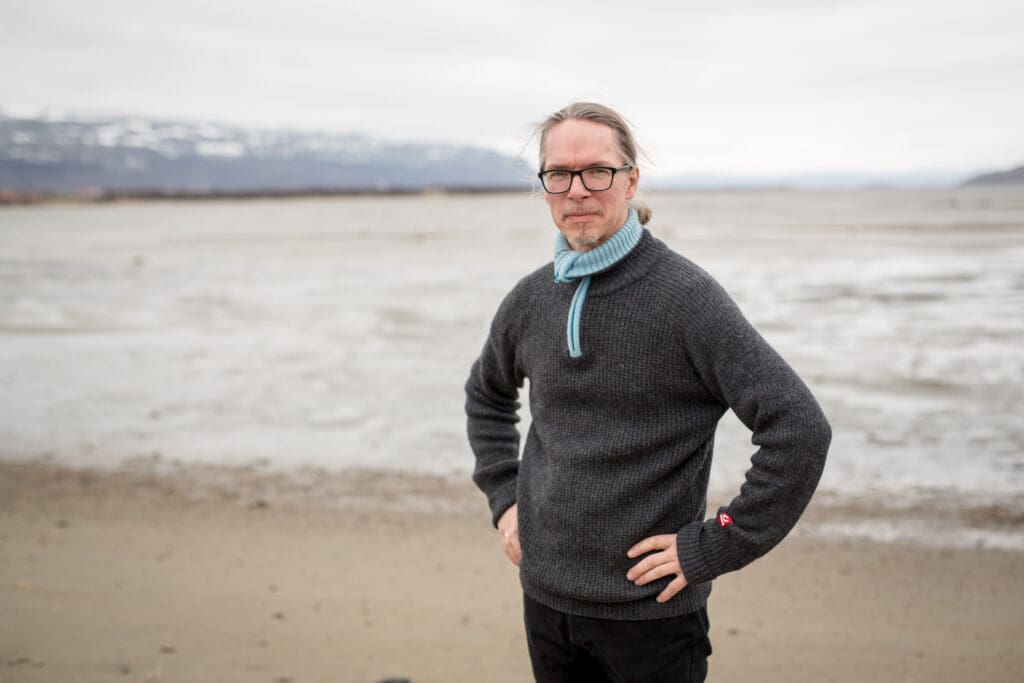
With the Porsanger Fjord as his office backdrop, the marine scientist Hans Kristian Strand conducts small experiments with major implications. “The common thread in everything I do—and our main reason for being here—is that we want the resources to return,” he says.
By: Bente Kjøllesdal // Institute of Marine Research
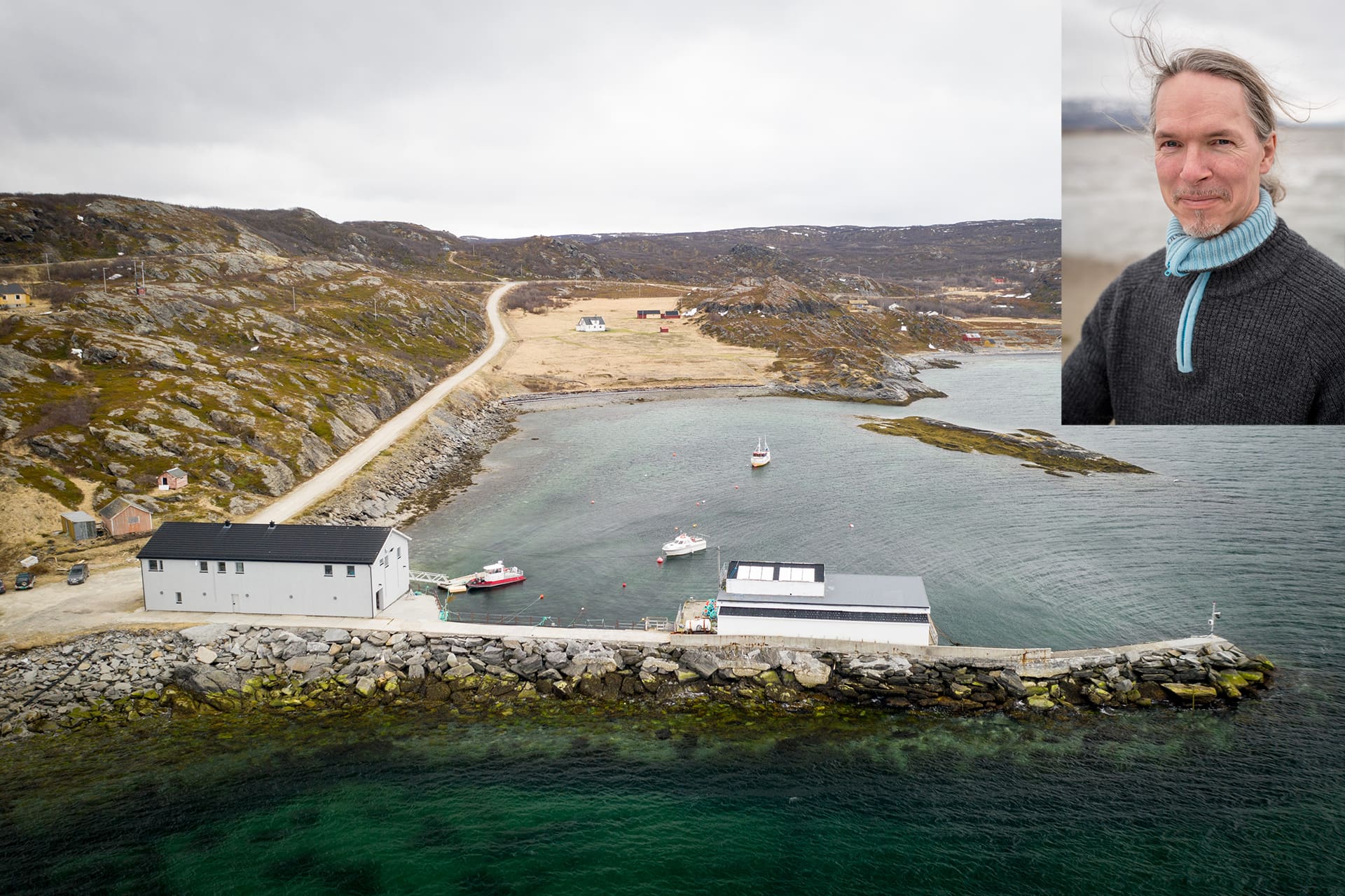
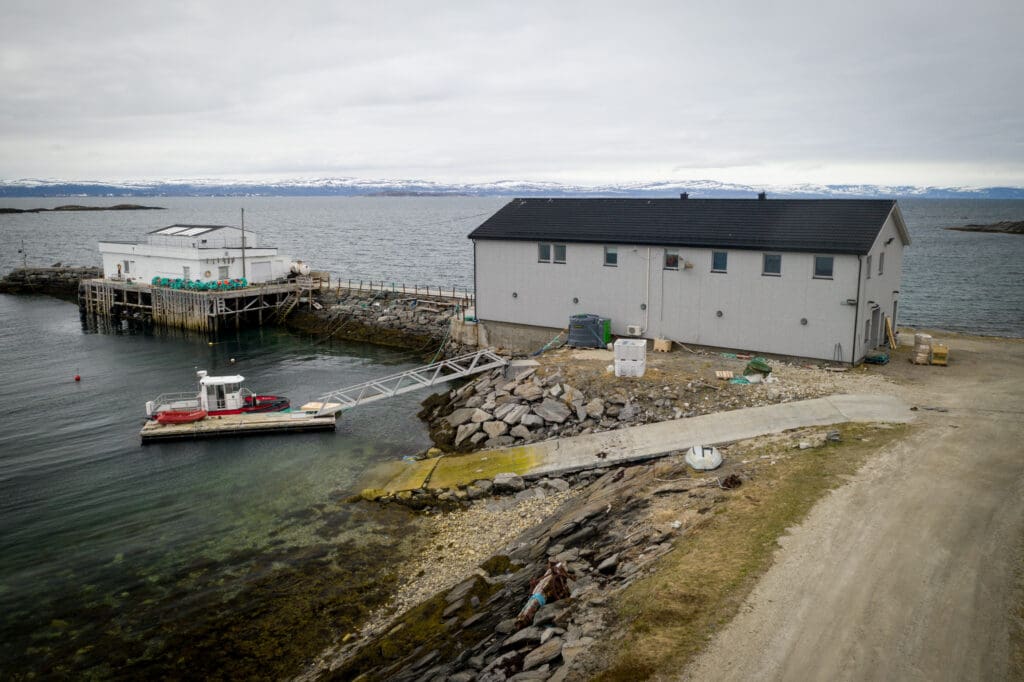
Strand runs the field station in Holmfjord, Finnmark, the northernmost outpost of the Institute of Marine Research. Right outside his office window lies Porsangerfjorden, the Arctic fjord he has worked in, on, and along for 15 years.
Before the Second World War, the fjord teemed with rich fisheries.
“But the fisheries have been absent for so long that people have grown used to it. Those who grow up here today have never experienced anything other than an empty fjord.”
A vicious circle
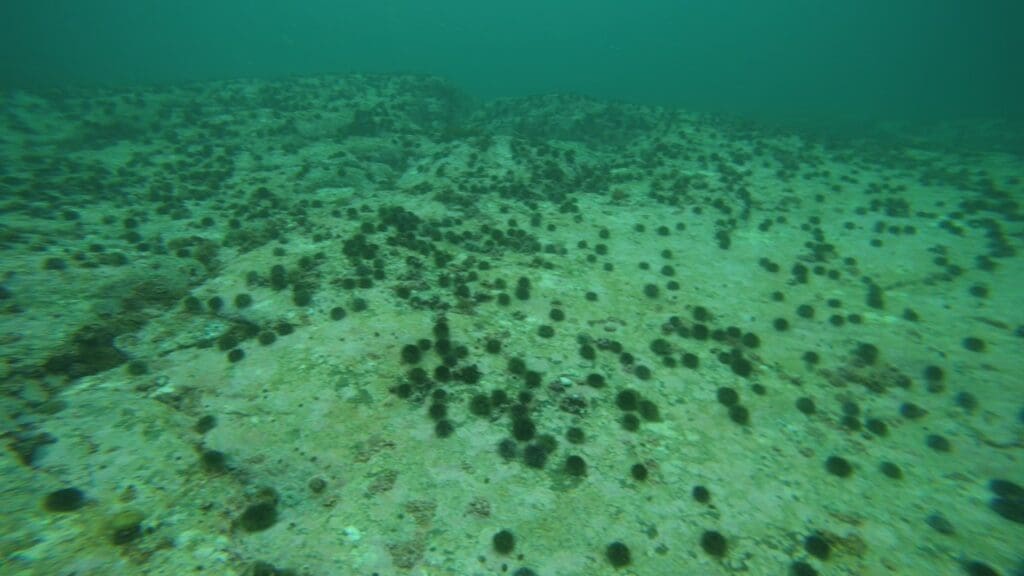
The ecosystem in Porsangerfjorden has gone through major changes over many years: declining fish stocks, sea urchins grazing down the kelp forest, king crabs marching in.
Green sea urchins do not normally attack healthy kelp, but if they become abundant and hungry enough, they can graze down vast areas.
When key species like plaice, large haddock, and wolffish disappeared from the fjord, the mechanism that kept the voracious sea urchins in check disappeared as well. The kelp forest turned into a desert.
“Once you’ve created a situation where sea urchins proliferate and graze down the kelp forest, it’s not enough to simply stop fishing wolffish. Without the kelp forest as an important nursery habitat, it’s difficult for fish to return,” says Strand. “It becomes a vicious circle, where the ecosystem is suppressed.”
And so the fjord has remained for decades.
But Strand is researching how these negative trends can be reversed—and his results show that there is hope on the horizon.
Fish and fjord
Hans Kristian Strand was born in Finnmark, but his family soon moved to the Nordland municipality of Fauske, where he grew up. He developed an early interest in the sea and in fish.
“One of the first things I did when I caught a fish was to gut it to see what it had eaten,” he recalls.
As a student, his interests were many and wide-ranging. Among them was the aquaculture industry that had become established in Norway by the late 1980s. Strand was particularly fascinated by the prospect of farming new marine species.
With a master’s thesis on halibut farming from the University of Bergen under his belt, Strand began gradually moving northward.
Nonetheless, fjord ecology would ultimately shape much of his research career.
The garage band feeling
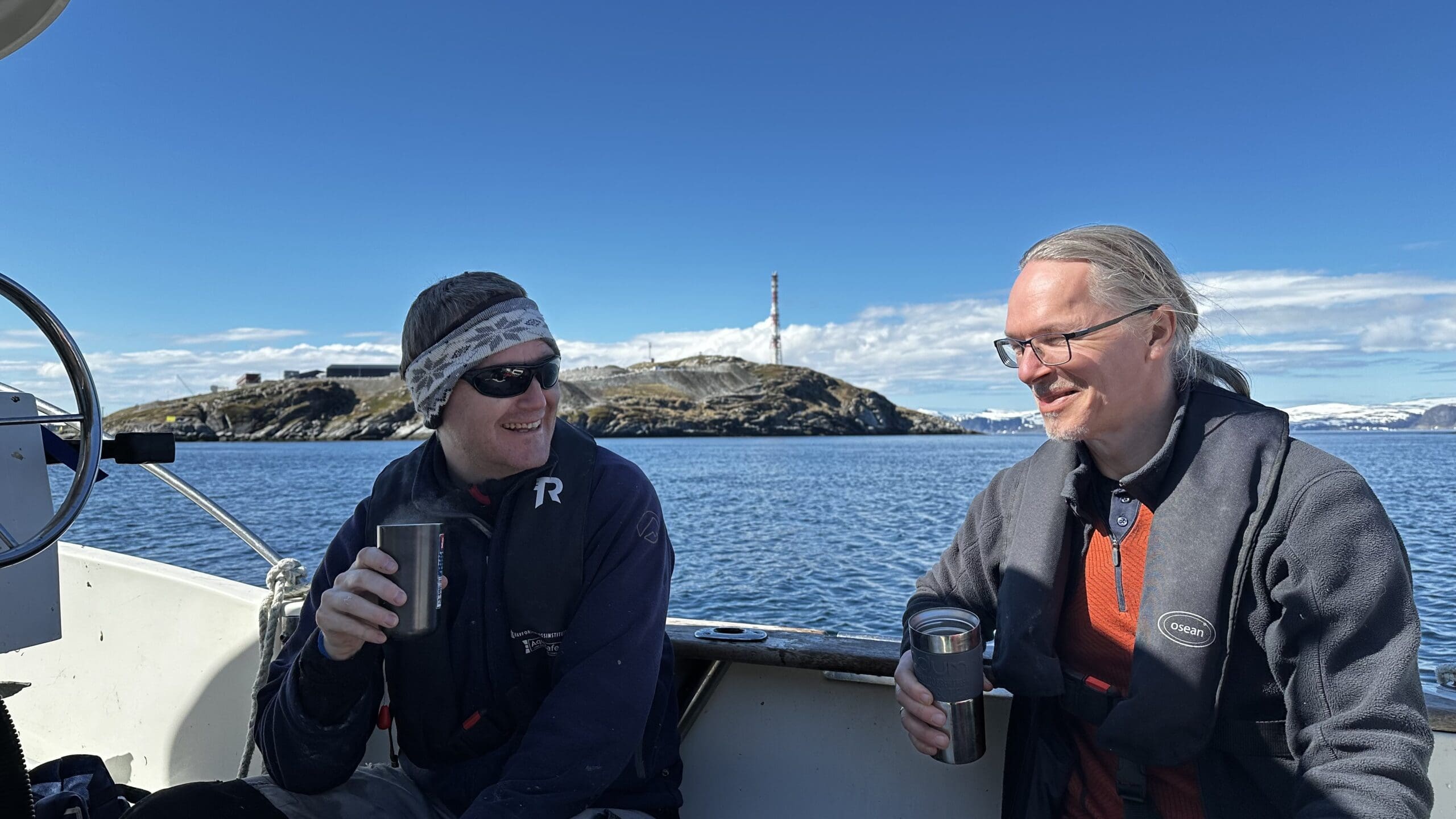
The northern field station has two full-time employees: Hans Kristian himself and his wife Mette—a duo both professionally and privately. They also have a reliable helper in Alf Børre Tangeraas.
“Working at a field station has some disadvantages; it’s a small environment,” says Strand.
But the network they have built in the north is large. They have long-standing and extensive cooperation with fishers, industry, and municipalities.
“And it wouldn’t work without the support we receive from researchers, technicians, and administrative staff working elsewhere.”
Strand admits that it’s no coincidence he ended up in the north: “At a small field station you get to keep that close-knit garage band feeling; you can get quite a lot done without being bogged down in bureaucracy.”
His workdays are divided between a boat on the fjord, the field station laboratory, and his office desk.
“To be here in this slightly chaotic zone where we can explore new concepts—and that this is actually our job—that is a privilege,” he says.
Years of experience
The northern field station of the Institute of Marine Research is located in a closed-down fish processing plant. It was this empty space full of potential that lured Strand and his wife back to Finnmark.
For several years, they ran their own business along the fjord, raising cod fry for sale.
At the same time, they collaborated with the municipality to investigate why coastal cod had disappeared from Porsangerfjorden. Their focus quickly turned to sea urchins.
“When conditions in the fjord meant that cod were no longer viable, we tried to reduce the sea urchin population by commercialising it,” says Strand. “But the urchins contained little roe—and it’s the roe that has monetary value. They had grazed down the kelp forest and thus their own basis for survival.”
Before the processing plant became a field station and part of the Institute of Marine Research in 2010, the Strands had amassed years of experience with the fjord’s complex ecosystem challenges—and ideas about how to address them.
An ecological catastrophe
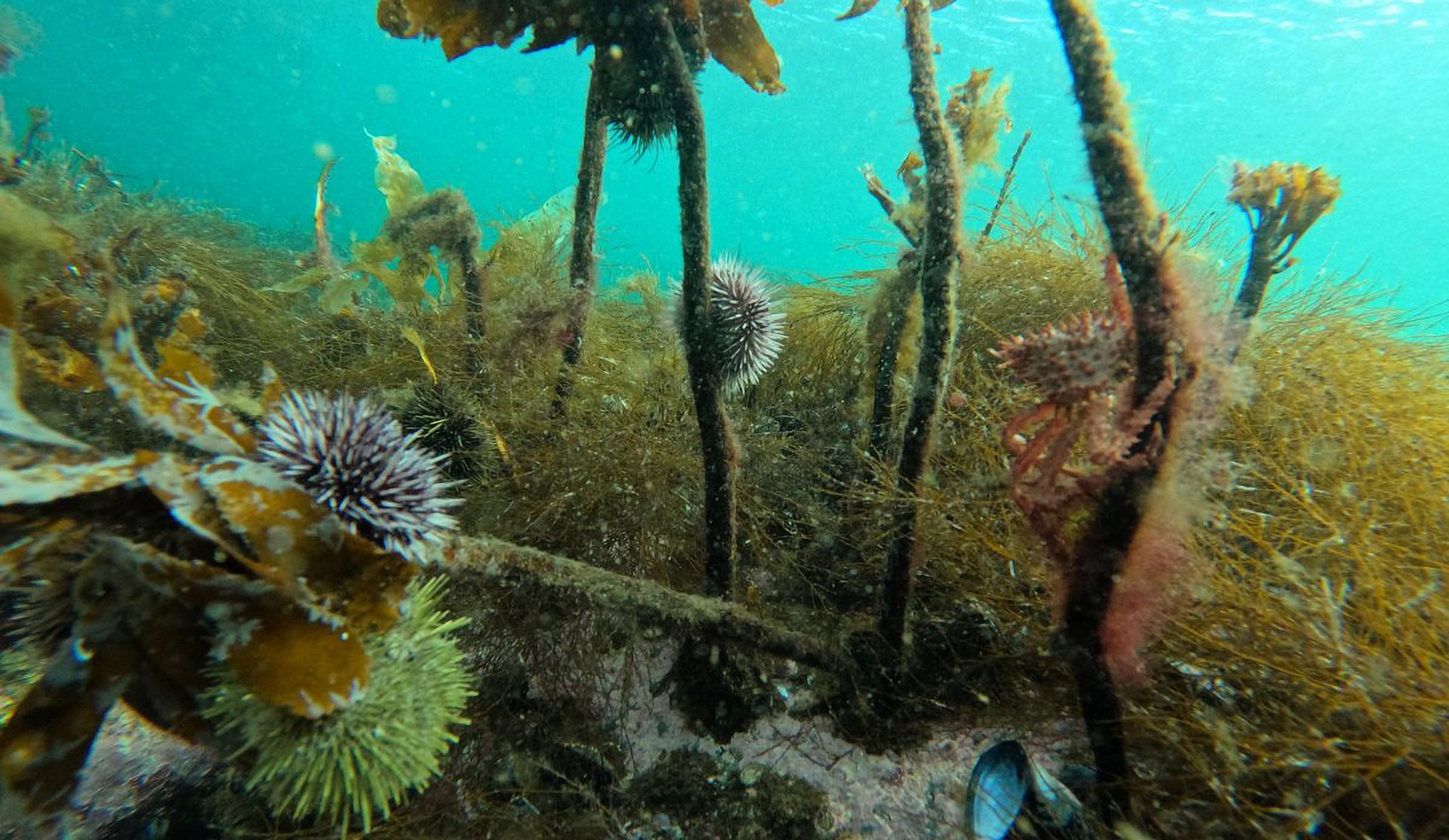
Kelp forests are key ecosystems along the coast. These blue forests produce oxygen, store carbon, and remove excess nutrients from the water. They are also nursery grounds and homes for a great diversity of species, from sponges, snails, and mussels to crabs and, of course, fish.
This is where fish hatch and grow. At night, predators enter from the deep to feed.
But human activity has put kelp forests in danger. Nearly 60% of the world’s kelp forests are declining.
In northern Norway alone, around 5,000 square kilometres of kelp forest have been lost.
“The collapse of the kelp forest was an ecological catastrophe. But because it happened underwater, it received little attention. If this had happened on land, it would be all we talked about,” says Strand.
But awareness is beginning to shift.
Kelp forest restoration is now on the agenda, and the issue has appeared in opinion pieces, newspapers, radio programmes, and news broadcasts.
Private citizens, non-governmental organisations, and politicians are speaking out in favour of a rescue operation. In June 2024, the Norwegian parliament requested a plan to reverse the trend.
At the same time, Norway does cutting-edge research on kelp forests, some of it at a field station in Holmfjord.
It all began at Felleskjøpet
At the field station, small experiments are carried out all the time. In 2013, marine researchers spread burnt lime in Porsangerfjorden for the first time to test whether lime could kill sea urchins.
“It all started when we went to Felleskjøpet, a supply store specialising in farming supplies, and bought 20 kilos of agricultural lime. We wanted to check whether water in Arctic areas was too cold for lime to be effective at all,” Strand explains.
When burnt lime is mixed with water, the alkalinity increases rapidly, causing a short-term corrosive effect. Echinoderms such as sea urchins are extremely vulnerable to this treatment, whereas shellfish, crabs, and fish are barely affected.
The researchers found their test site right outside the office window: swarms of sea urchins had settled around the pier by the field station.
“The sea urchins died, and the following year, the kelp grew.”
Their experiment was scaled up. The areas they treated with lime were already mostly barren—the sea urchins had created marine deserts.
For over a decade, the researchers monitored changes, and in Porsangerfjorden the results were striking: in lime-treated areas, lush kelp now grows. And the invasive king crab has taken over the role of wolffish, haddock, and plaice in keeping sea urchin numbers down.
Juvenile fish in peril
Ecosystems are complex networks. If changes occur in one part, they can set off chain reactions.
When a top predator like cod disappears, its niche does not stand empty waiting for it to return—quite the opposite.
Species like sculpin, which sit mid-level in the food chain, seize the opportunity. Their numbers increase and they move into the available habitat.
“We’ve calculated that there are many millions of them in Porsangerfjorden, and we’ve documented that sculpin are voracious eaters with a great appetite for juvenile cod.”
The researchers hoped that if the kelp forest was restored, the juvenile fish would survive. They set up an experiment to test the hypothesis:
“We released juvenile cod and saithe in an aquarium experiment where predators like sculpin and small cod were present, and where seaweed and kelp provided plenty of hiding spots. We assumed this would protect the young fish.”
But they were wrong. The experimental setup put the juveniles in a perilous position.
“Small cod chased the juveniles down into the kelp forest, where they were eaten by sculpins. The juveniles that the sculpins missed darted upward, where they were swallowed by the small cod.”
In other words, restoring the kelp forest wasn’t enough. To recreate an ecosystem where coastal cod larvae could grow to adulthood, the researchers also needed to figure out how to ensure that the juveniles survived.
They needed another predator.
“We introduced a wolffish. It was very aggressive. Every time it saw a sculpin, it chased it away. The sculpins had all they could handle simply trying to hide: they posed less of a threat, and far more juvenile cod and saithe survived.”
Meaningful detours
Hardly a day passes without Strand heading out on the fjord he devotes much of his research to. The field station is right by the water, and the research boat lies ready at the pier.
“It’s not necessarily whatever it is we’re actually studying that’s most exciting, but all the side things that crop up while we’re out there, with our hands in the water,” he says.
“I’m not married to my research questions, and I appreciate being able to follow up on unexpected tangents.”
That was also the case with one of the latest innovations in the north.
We know that kelp forests are vital feeding and nursery grounds for juvenile fish, but sculpins know this too. The researchers realised that if they were to help the young fish survive, they needed to recreate kelp habitat beyond the sculpins’ reach.
“After quite a lot of trial and error, we suddenly stumbled on a concept that exceeded our expectations: artificial kelp reefs.”
Record results
This past winter, the researchers lowered artificial reefs into Melkøysundet, a sound outside Hammerfest.
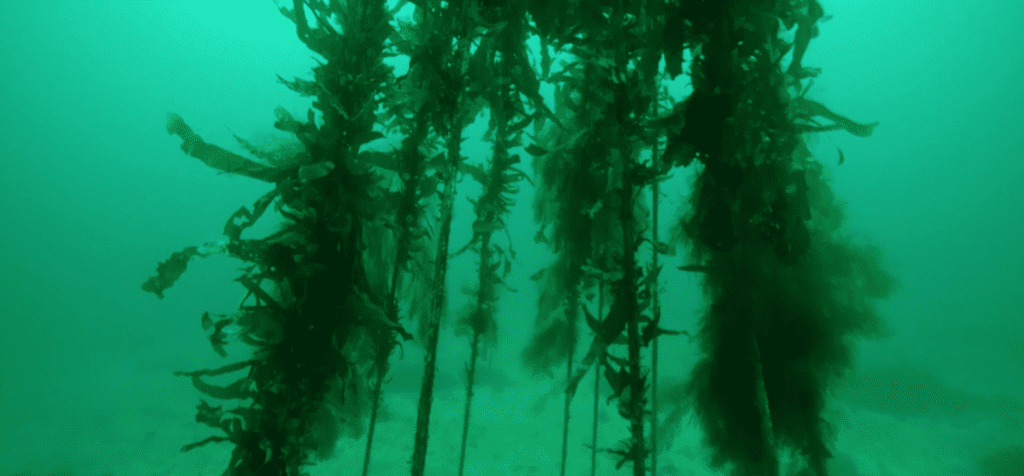
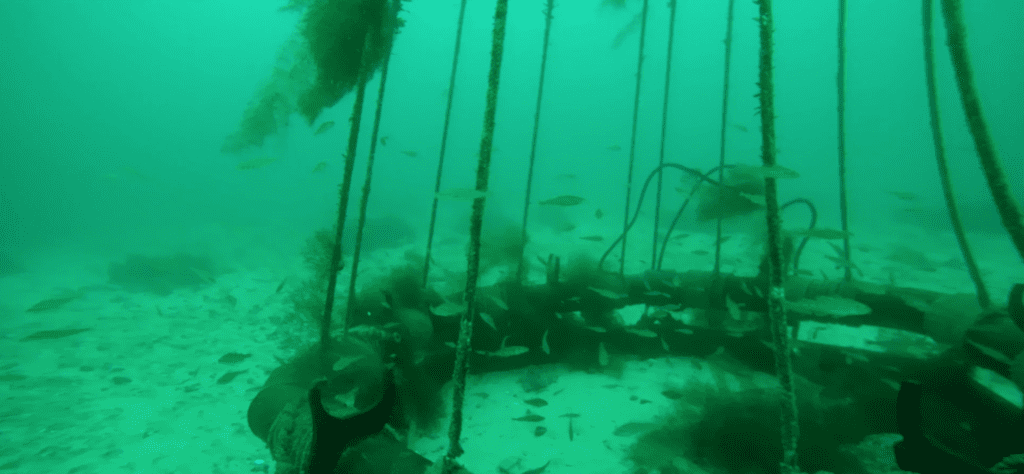
The reefs stand at about 20 metres depth and are anchored with a ring resting on the seabed. From this ring, ropes stretch 10 to 15 metres upward in the water column.
Four months later, research divers went down to inspect whether the reefs had borne fruit.
“They were covered in lush kelp, in record time. Kelp grew densely on all the reefs we had placed, and we saw both cod and saithe juveniles in large numbers around the structures,” says Strand.
Between the reefs, the researchers have introduced a voracious rescue patrol: wolffish.
The wolffish became popular as food in the 1960s, but the population could not handle the consumer demand.
Now, Strand and his colleagues at the Institute of Marine Research have carried out an unusual relocation: twenty wolffish were caught along the coast and transported to their new home in Melkøysundet. If they thrive, the predator may curb the sea urchin problem and give the kelp forest the respite it needs.
“Then the wolffish can help break the negative spiral that keeps the ecosystem overgrazed.”
Food and traditions
A combination of different methods and approaches will likely be required to secure a thriving kelp forest, and eventually a re-established coastal cod stock.
“In the past, you could put the potatoes on to boil, then go out and bring back the fish you wanted for dinner. Without that access to fish, people wouldn’t have lived here. The world changes—obviously it changes—but when that access is lost, we lose something more,” says Strand.
It’s not only about food resources and understanding the biological interplay in the fjord—it’s also about cultural heritage.
“Have you heard of skaveltorsk?” Strand asks. “Cod that were caught here late in autumn were buried in snowdrifts (skavler), and then eaten throughout the winter. They would be somewhat worse for wear when spring approached, but had a distinctive sour, fermented flavour. Skaveltorsk was eaten with seal blubber.”
Sour cod (surtorsk), on the other hand, was cod packed in jute sacks early in the year and stored among the shoreline stones.
“It’s a food culture almost no one has heard of. These are methods of preparing and preserving cod, and they’re about surviving on the resources available.”
Porsangerfjorden is still lacking the abundance of fish it used to have. But Hans Kristian Strand is optimistic about its future: “My fundamental belief is that we can pull this off—that the resources can return and become at least as productive as they once were. We just need to avoid making the same mistakes again.”