

Vast open territories in the Arctic have been claimed and named as though they were blank white pieces of canvas. But the Indigenous place names that existed long before these new names were invented carry history, culture, and identity.
By: Ellen Kathrine Bludd // UiT The Arctic University of Norway
Karine Nigar Aarskog* // Norwegian Polar Institute
*Also affiliated with UiT The Arctic University of Norway
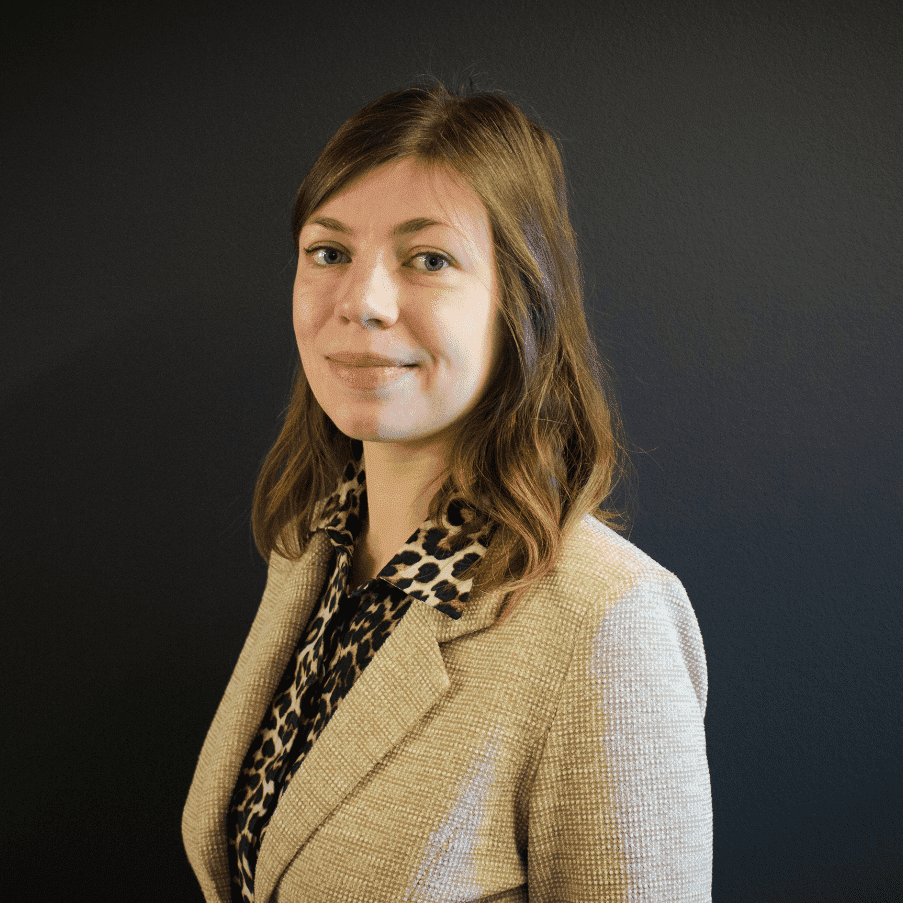
“Indigenous place names hold significance beyond mere geographical labels; they embody a vibrant tradition that ties communities to their environment. Still, through a history of colonialism these names have been replaced, removed and wrongfully translated on maps,” says Ekaterina Mikhailova, associate professor in border studies at UiT The Arctic University of Norway.
She believes restoring Indigenous place names on maps and in everyday language is an important step toward social justice.
Naming as an exercise of power
“Naming is never a neutral act; it is always political and related to power,” states Mikhailova.
She explains that whether it is a ruling elite, a privileged class, a king, or a dictator, certain social groups and individuals exercise the authority to name places in accordance with their values, while others do not.
Hence, the disparity of power is replicated in the space around us.
“Colonial cartographic traditions saw new lands as terra nullius, a place void of history and culture that is ‘waiting’ to be named and mapped,” says Ekaterina Mikhailova.
She clarifies that such colonial mapping of territories erased Indigenous place names, and with them the connection between Indigenous peoples and their lands, from both maps and collective memory, contributing to the marginalisation of Indigenous peoples and their cultures.
Mikhailova gives the example of Cambridge Bay in Nunavut, Canada. This name was given by British and Canadian explorers in the 1880s and does not reflect the area’s history or its significance to the original inhabitants.
“The original name, Iqaluktuuttiaq, means ‘the good fishing place’ and tells a completely different story—a story about the landscape, resources, and the people who have known and used these lands for generations,” says Mikhailova.
We can find similar examples across the Arctic.
Names evoke landscapes and land use
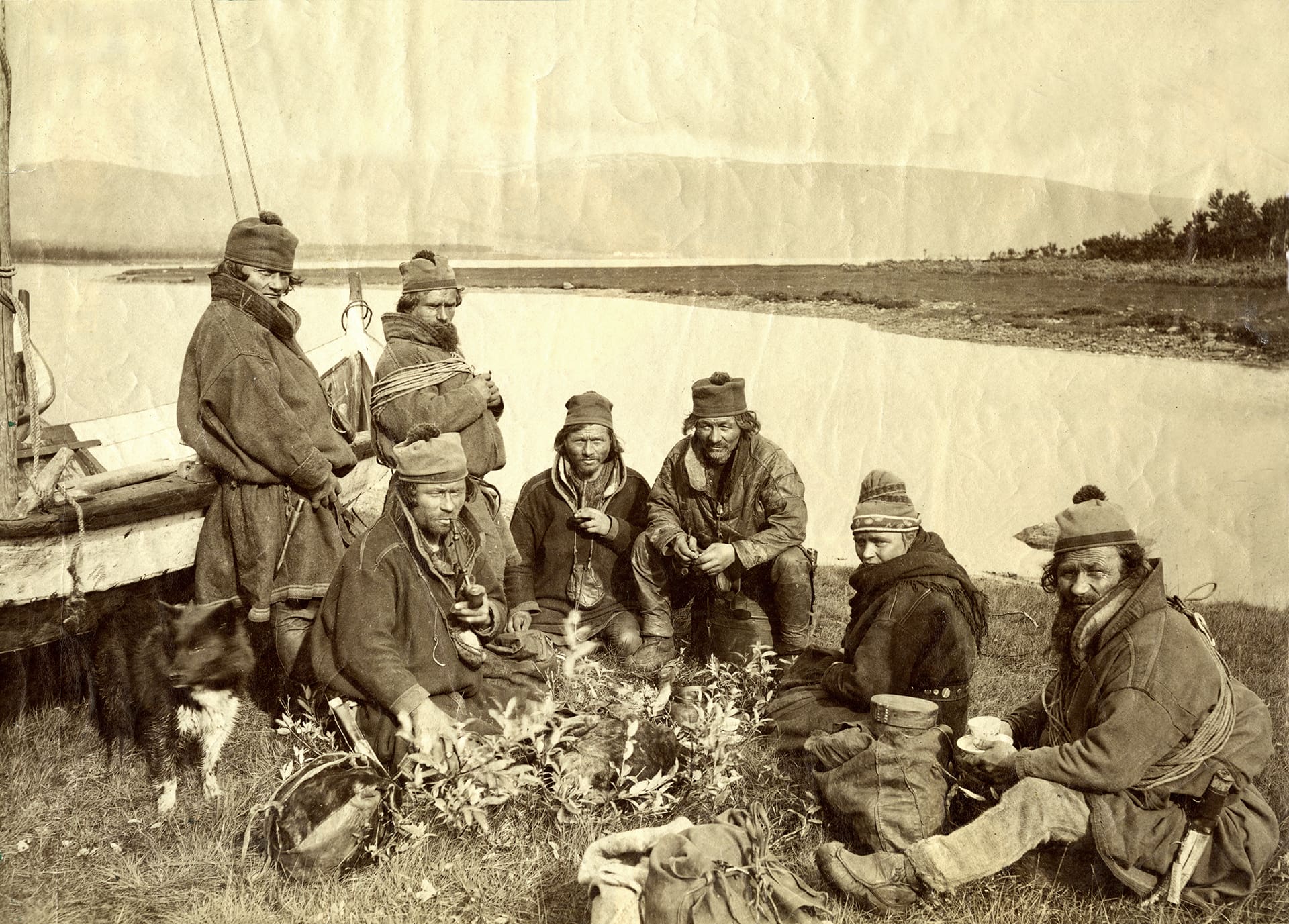
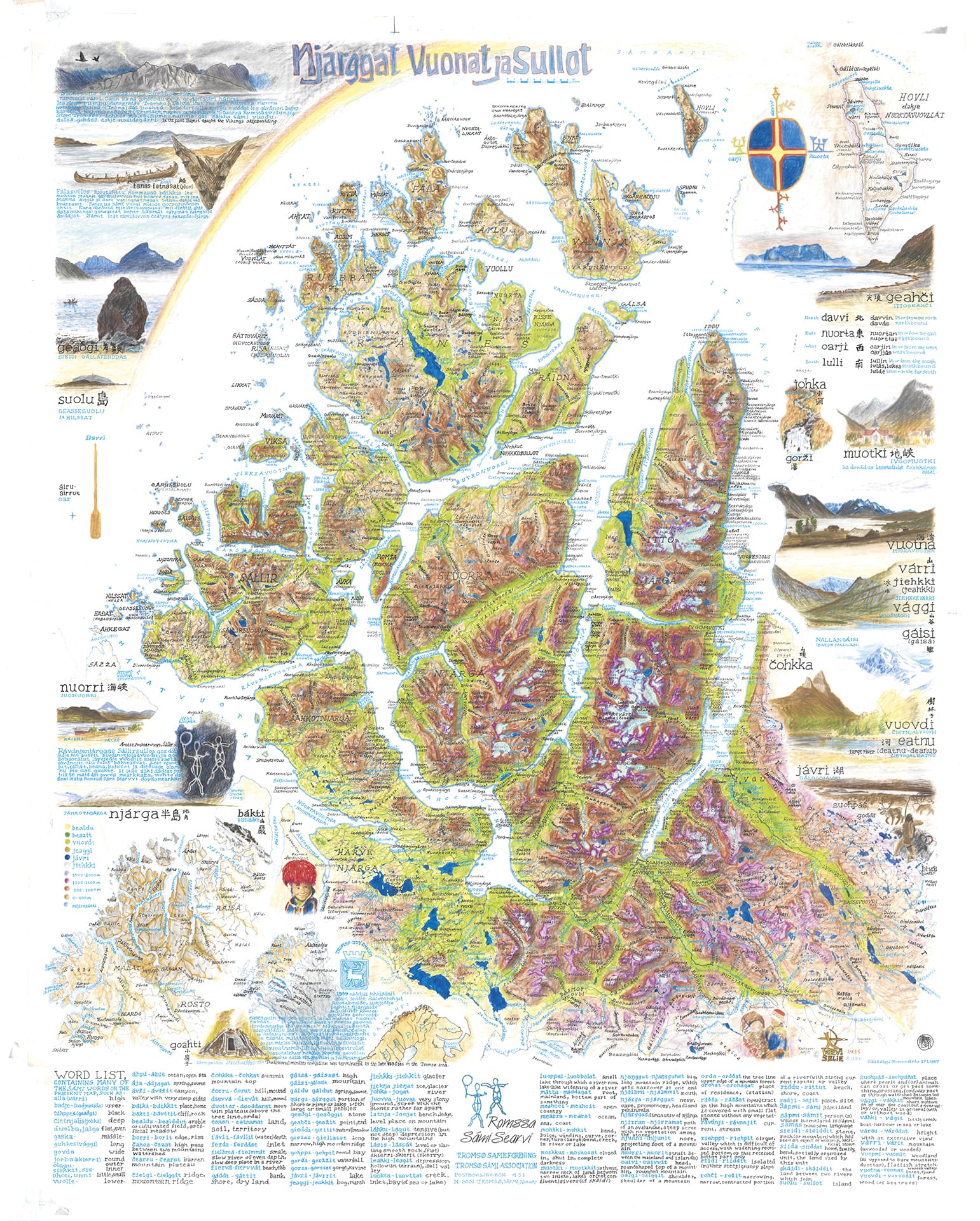
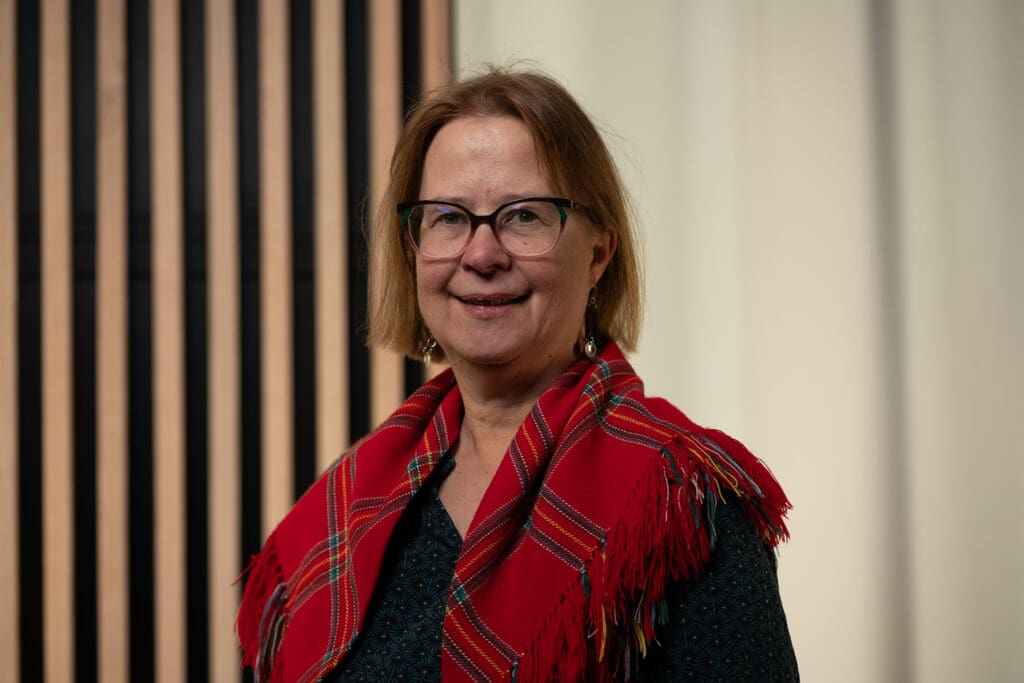
Lene Antonsen, professor of Sami language at UiT explains how Sami place names in Sápmi, in northern Scandinavia have been created:
“Typical of Sami place names is that they speak of the natural landscape of the location, or about the use of the land. Many names speak about hunting, fishing, berry picking, travel, reindeer herding and livestock farming. Some names speak of people who have had a connection to that specific location. Other names originate from spirituality and mythology.”
There are several Sami languages, which is also reflected in the place names.
“Some names are incomprehensible today and are interpreted as remnants of languages that were spoken in the area before a language shift to Sami occurred,” Antonsen explains.
“Indigenous place names exist as a system in which the names relate to each other as a chain of experiences and stories. Passed orally from generation to generation over hundreds of years, Indigenous place names serve as a vital aide for wayfinding and the transfer of accumulated knowledge,” Ekaterina Mikhailova explains.
Norwegianisation of Sami names
In Norway, the government had a Norwegianisation policy against the Sami and Kven people from the 1850s to around 1963. During this period there was an active attempt to remove Sami place names from public use. An 1876 land sale regulation required properties to have Norwegian names, with Sami or Kven names in parentheses. Later, the Norwegian Geographical Survey translated Sami names into Norwegian if a Norwegian name did not exist.
This practice had consequences for the Sami names on land maps, where place names were Norwegianised—often with incorrect translations. Where both Sami and Norwegian names were in use, as a rule only the Norwegian name was to be included on the map.
In 1937, the policy shifted to require that Sami names be included on maps. Finally, a 1990 law mandated that Sami and Kven place names must be used publicly on maps, signs, and registers, either alone or alongside Norwegian names.
Important to use Sami names today
“Some places only have Sami names, especially in the wilderness. Thus, it would be a falsification of the history of the location if one starts replacing a Sami name with a newly created Norwegian name,” says Lene Antonsen.
She explains that where parallel Sami and Norwegian names exist, it is important that the Sami names are visible, on maps, signs, and in databases. This to show equality between the languages, but also to prevent the names from being forgotten.
Sami speakers are a minority, except in inner Finnmark, the northernmost county. In some areas, the Sami language has almost disappeared, and especially in these areas the Sami names function as important cultural heritage.
“The Sami place names speak of the Sami language that has been used in the area. Additionally, they can be a motivation for those who want to learn the language,” Antonsen says.
Sometimes Sami and Norwegian names have completely different meanings, and thus the two names together will explain more about a location than just the Norwegian name alone. This in turn has great cultural-historical value.
Many Norwegian names are phonetic adaptations of the Sami name, and if the Sami name is visible on maps and signs, one understands how the Norwegian name came about.
“But most importantly,” Antonsen says, “Norway has recognised Sami languages as equal languages and Indigenous languages, and this also applies to Sami place names. Sami names cannot be silenced.”
Restoring Indigenous place names
“Indigenous place names are often rooted in experiences, sensory impressions, and deep knowledge of the landscape. They offer a window onto a different worldview, a different relationship between nature and humans: one of coexistence, where humans are part of nature rather than being superior to nature,” Ekaterina Mikhailova explains.
Bringing back these names is therefore an important step to take for social justice.
“Having Indigenous place names on the map is visibility, recognition, and challenging colonial power structures that still shape society,” she says.
“However, bringing Indigenous place names into active use is not easy. Indigenous place names are often in languages that are unfamiliar to the majority population.”
This can make it difficult to integrate them into everyday language and maps.
Mikhailova presents a potential solution: develop interactive maps where the names are explained with their meanings and histories. This can help bridge cultural divides and increase understanding of Indigenous perspectives.
Invisible Sami language
“Sami language has been quite invisible to Norwegian speakers. For those who have grown up with only Norwegian place names, Sami names may be unfamiliar and may alter their perception of the place,” says Lene Antonsen.
The visibility of the Sami names on signs also gives status to Sami languages.
“For some of those who do not speak Sami, this may arouse curiosity, they may want to know more about the names and the language,” says Antonsen. “But for others this may be provocative,” she continues, and explains that Sami language thus gains a status that contradicts what they have learned through their upbringing.
“I also believe that part of the reason is that the Sami language has been exclusive to Sami people and not a national language. Thus, knowledge of the language is very low among Norwegian speakers,” says Lene Antonsen.
Most Norwegian-speakers haven’t learned about Sami languages at school, and all use of Sami has been suppressed, even for everyday communication such as greetings.
Ekaterina Mikhailova maintains that the current path to reclaiming Indigenous place names is a vivid testimony that these place names are not just a part of the past; they are a key to understanding the present and shaping the future.
“By reintroducing and valuing these names, we can help create a society that is more just, inclusive, and respectful of those who came before us,” she says.
Ekaterina Mikhailova concludes with a call to action: “Learning Indigenous place names is a way to orient oneself, not just geographically but also culturally and historically. It is a way to challenge colonial power structures and contribute to a more just and inclusive world.”